Skip to Content

On Wednesday, November 25, the Bentley Library will close at 4:30pm. We will be closed in observance of Thanksgiving from Thursday, November 26, through Saturday, November 28.

Ask an Archivist
A group of protesters marching in 1960s Ann Arbor, with a banner behind them, trees, and buildings, including the Hatcher Library.

1960s protest in Ann Arbor (1)

Another Look at the Michigan Murders

A new documentary, produced with numerous Bentley materials, paints a portrait of a serial killer’s spree, a changing culture, and of police more focused on “freaks and radicals” than a clean-cut murderer.

Back to Fall 2026 Issue

In and around Ann Arbor and Ypsilanti from 1967 to 1969, a string of murders appeared to be linked. All were of women or girls, ages 13 to 21. Some victims were strangled, some stabbed. Collectively, the deaths, and the inability of law enforcement to catch the murderer, set off a panic in the area.

Those sensational details first caught the attention of filmmaker Andrew Templeton when he spotted the 1976 Edward Keyes book The Michigan Murders in the Ann Arbor District Library around 2018. His interest may have ended with reading the book if he hadn’t started to tune into something else happening in Ann Arbor and Ypsilanti at the same time as the murders: an intense police response to protesters, counterculture leaders, and college students — a response that sometimes included tear gas, billy clubs, and arrests.

“I was trying to understand the culture at the time,” says Templeton. “Really I was wondering, what was it about the culture that allowed someone to get away with these murders for so long?”

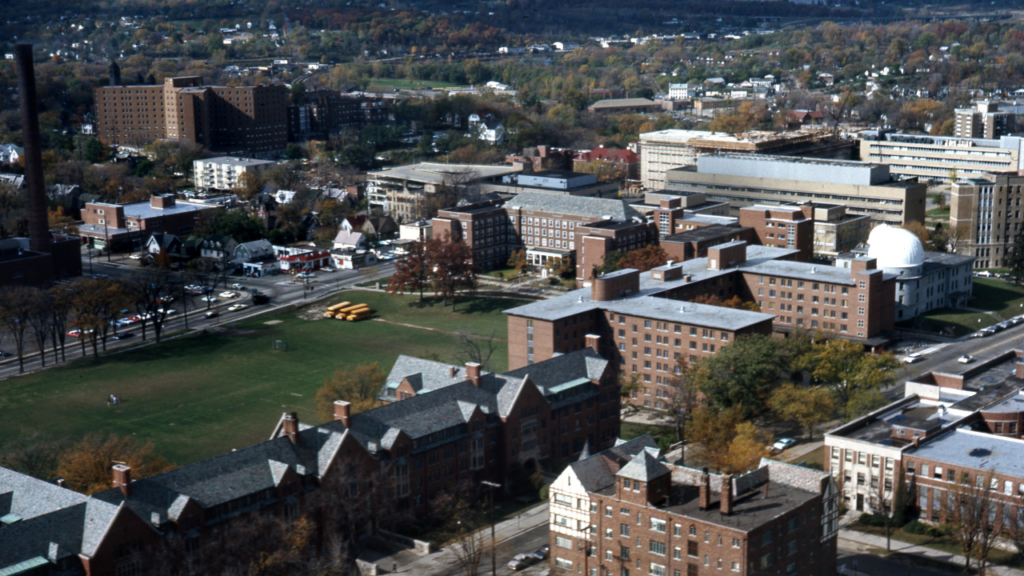
Aerial view of the University of Michigan's Mosher Jordan and Alice Lloyd residence halls.

1967 aerial view of Ann Arbor during the year when these murders began, including the Mosher Jordan and Alice Lloyd residence halls, from the Campus Development and History slides.

Templeton isn’t the first person to ask that question. Community members at the time, including victims’ families, asked the same thing. Templeton is, however, the first person to make a documentary that poses the question.

He made the film, 1969: Killers, Freaks, and Radicals, which has been screened for over a year and won the audience award at the Ann Arbor Cinetopia Film Festival. His hope is to get it picked up by a streaming service.

Templeton made 1969 with the help of extensive research he conducted at the Bentley Historical Library, in addition to interviews with retired law enforcement officers and women who were similar in age to the victims in the late 1960s. They all helped to paint a picture of the crimes, the fear, the time, and the place.

“It was a small town … and not that much happened in the ’50s,” says one interviewee, Ruth Ryan, in the movie. She is an Ann Arbor native who attended U-M for undergrad and graduate school. “All of that came to a crashing end in the ’60s.”

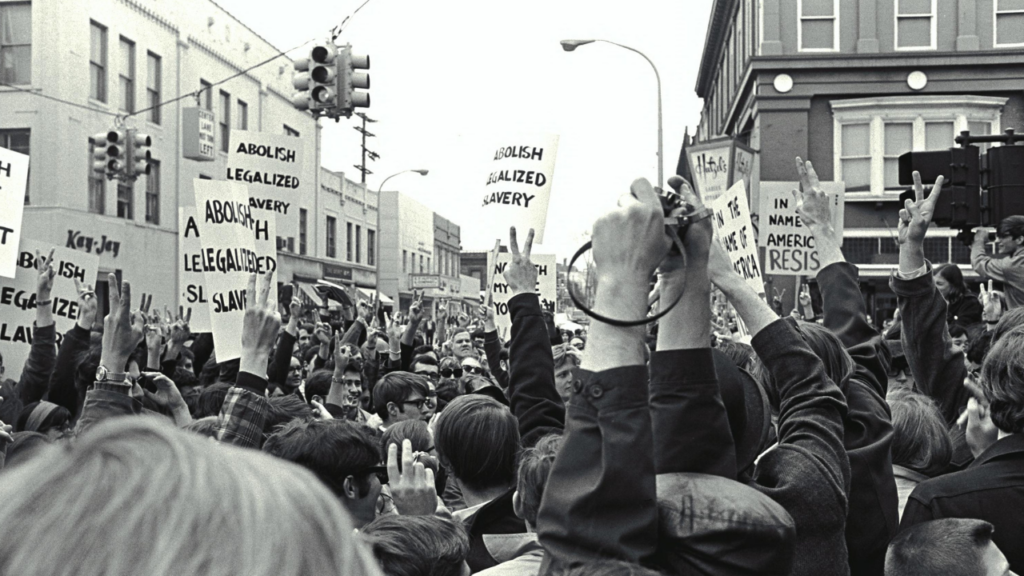
A draft protest in 1968 Ann Arbor featuring a crowd of people holding up signs that say "Abolish Legalized Slavery", with buildings and stop lights in the background.

A draft protest in Ann Arbor in 1968, featuring people holding up signs that say “Abolish Legalized Slavery.” This photo, from U-M’s News and Information Services, shows one of many protests in 1960s Ann Arbor.

The Victims and a “Model Citizen”

The first known murder victim was 19-year-old Eastern Michigan University (EMU) accounting student named Mary Terese Fleszar, last seen in July 1967 and found a month later. The next victim was nearly a year later, Joan Elspeth Schell, 20, Ann Arbor. Then Jane Louise Mixer, 23, U-M law student. Maralynn Skelton, 16, a high school student from Romulus. Dawn Louise Basom, 13, a junior high student from Ypsilanti. Alice Elizabeth Kalom, 21, a U-M graduate student. Karen Sue Beineman, 18, an EMU student.

As early as the second murder, people were raising questions about an EMU student named John Norman Collins, who lived across the street from victim Schell, who had been seen with her according to eyewitness accounts, and whose alibi for the timeframe was never properly checked. His uncle was a state police corporal.

Leading the investigation was Sheriff Doug Harvey, a law enforcement officer who was the youngest sheriff sworn into office in Michigan history, just 34 when his term began in 1964.

“Sheriff Harvey said, ‘we’re looking among the freaks and radicals and hippie element for the killer.’ That captured exactly what was wrong with their mentality,” Ryan says in the documentary. “They carried with them prejudices in their view of how a person should be. The ideal was clean-cut, tall, handsome, joined fraternities, played football.”

Collins was exactly that: clean-cut, a fraternity member, an athlete. Yet he was known on campus for dealing in stolen motorcycle parts, and he harassed another EMU student by telling her gruesome details about the Schell murder. He was questioned in that case, and eliminated as a suspect.

Templeton shows examples in the film of how Collins was suspected but given the benefit of the doubt, raising the question of whether one or more of the murders could’ve been prevented if a tighter investigation had been conducted.

“To those who knew him from a distance, John Collins in a lot of ways embodied this old-school aesthetic, this tall, strong, relatively good-looking athlete, fraternity brother, not to mention his uncle was a state police officer,” Templeton says in an interview. “All of these things routinely led to him being overlooked or given a pass that I don’t believe he would’ve gotten if he had looked like the counterculture people, the ones police were calling ‘freaks’ and ‘radicals.’”

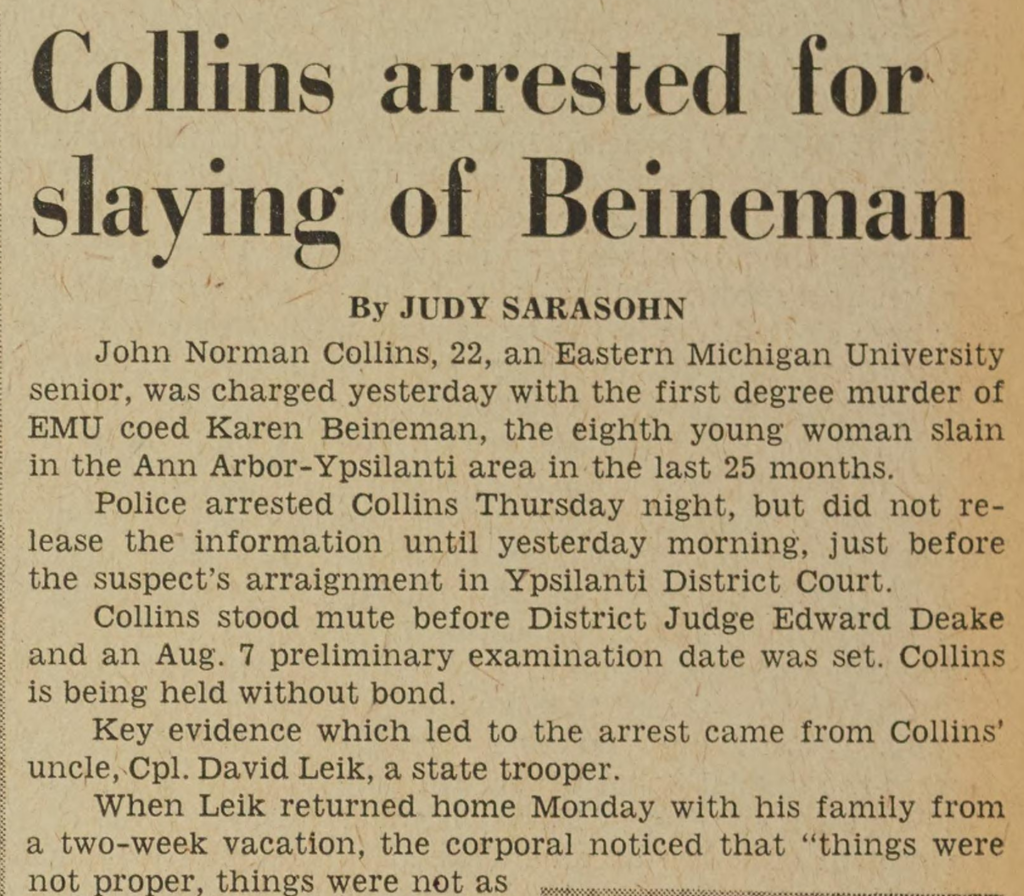
Michigan Daily article beginning that reads: Collins arrested for slaying of Beineman.

August 2, 1969 Michigan Daily article titled "Collins arrested for slaying of Beineman."

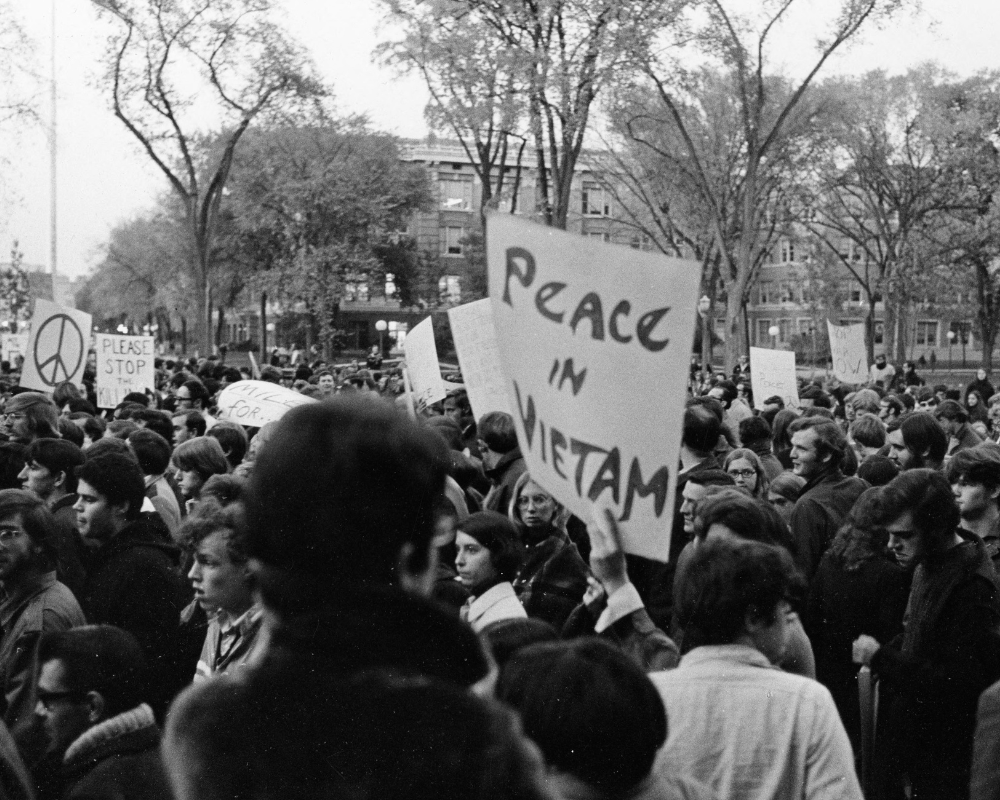
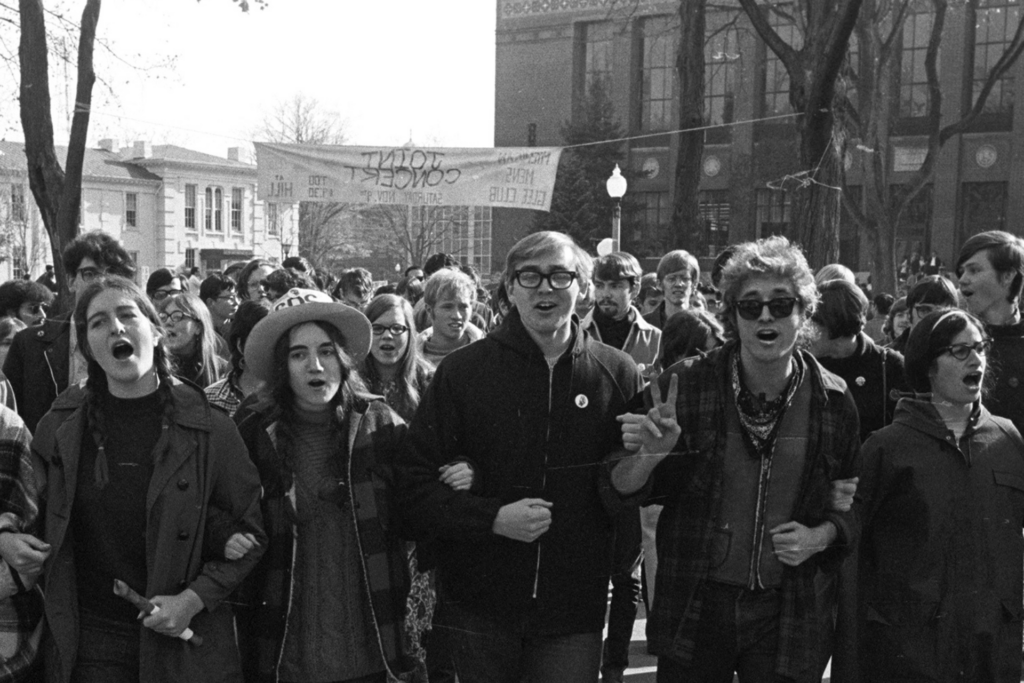
A 1969 anti-war protest on the Diag at the University of Michigan including protesters holding up signs that say "Peace in Vietnam."

A 1969 anti-war protest on the Diag, from the News and Information Services collection.

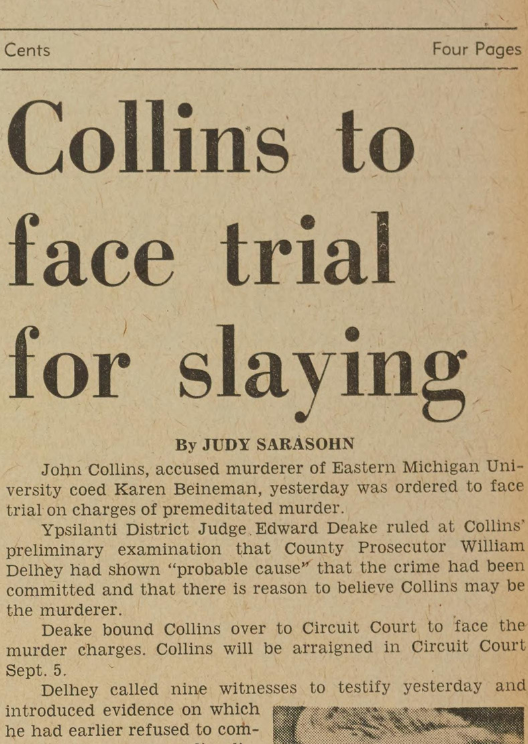
August 15, 1969 Michigan Daily article titled "Collins to face trial for slaying."

August 15, 1969 Michigan Daily article titled "Collins to face trial for slaying."

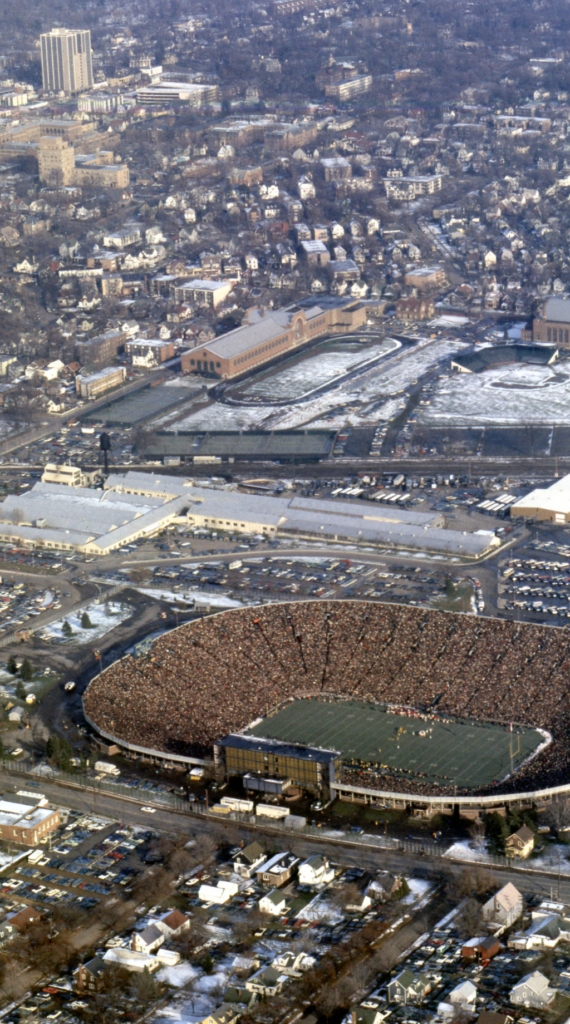
Aerial view of Ann Arbor in the 1960s.

An aerial view of Ann Arbor as it looked in late 1960s when these murders took place.

On U-M’s campus, meanwhile, protesters were marching and sitting-in to oppose the Vietnam War, support civil rights, and to speak out about a variety of issues. Many local police officials took issue with everything from their haircuts to their clothing to their politics, while more than a few protesters referred to police as “pigs.” The South University Riots of June 1969 were the culmination of the anger and frustration: four nights of confrontations between local law enforcement and portions of Ann Arbor’s counterculture population.

“It was commented on in the Michigan Daily and the local papers that the police were able to synchronize five different police agencies and riot gear to crack down on a public demonstration on South U that by all accounts had started pretty peacefully,” Templeton says. “But it wasn’t until the sixth murder, I think that same month, June 1969, that they established a task force for five different local police agencies to work on the murders.

“I know it’s a little bit apples to oranges, but people at the time definitely noticed and thought, ‘wow, they can organize for these kinds of political displays or challenges to power, but when it comes to murders of young women, they’re all fighting among each other.’”

The Hippies Weren’t Surprised

That frustration comes through in the documentary: Why wasn’t more done to organize the law enforcement agencies earlier in the process? Why wasn’t Collins considered a more serious suspect after the second murder? Was there a connection between the treatment of Collins and his uncle’s position with the state police? If police were less focused on campus protests and anti-war sit-ins, could they have organized a more successful murder investigation?

Yet Templeton is even-handed and nuanced in his narrative. He interviewed former Sheriff Douglas Harvey at length, and the larger-than-life figure appears on screen at length in 1969, defending his department’s role in the investigations.

Most sympathetic of all the law enforcement figures featured or mentioned in the film is Larry Mathewson, who was an EMU police officer in the late 1960s and who played an integral role in the eventual arrest of John Norman Collins for one of the murders in August 1969.

Mathewson told Templeton, “the public has a right to know more” about these crimes and the time period in which they took place. He speaks in the documentary about his suspicions of Collins’ links to other murders.

The documentary, the book The Michigan Murders, and numerous newspaper articles have more to say about Collins’ possible role in the other murders, whether he had accomplices, how much Collins’ uncle may have been aware of, a link to a murder in California.

For Templeton, one of the reasons for telling this story was that only one of the murders was ever officially solved. Collins was convicted in 1970 of killing Beineman, the final known victim, in his state police corporal uncle’s basement. The other victims’ families never knew definitively who was responsible for their murders.

Legendary Ann Arbor counterculture leader John Sinclair sums up the disconnect in the documentary: “I don’t think anybody that was a hippie was much surprised to find that it was a person with police connections. We were quite relieved that they had caught this guy, and the fact that he was related to these state police characters kind of explained why it had taken so long.”

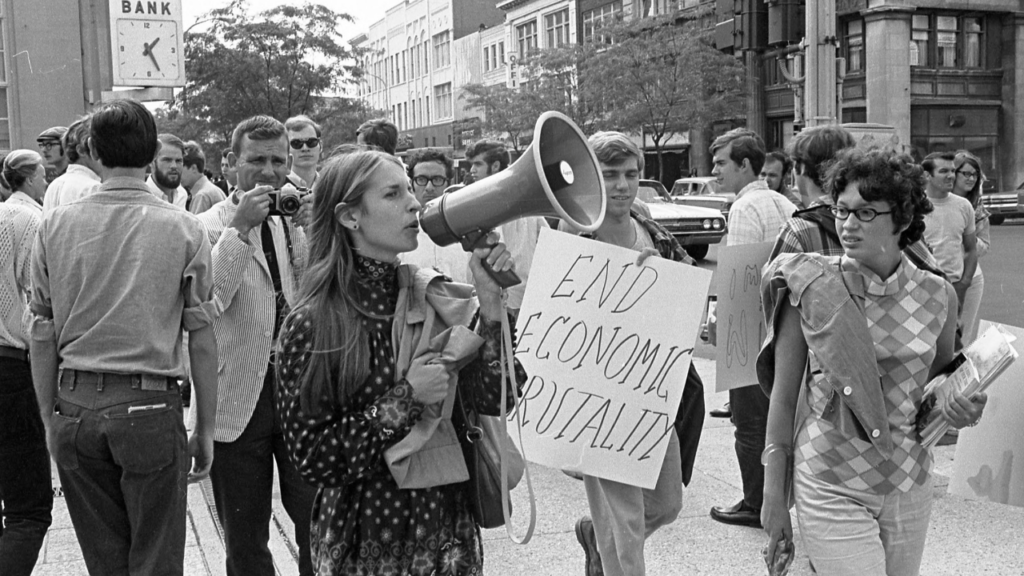
Protest to end economic inequality in 1960s Ann Arbor, featuring a woman with a megaphone, people walking, a man holding a sign that says "End Economic Inequality," and a man holding up a camera to take a photo.

A photo of a 1968 protest in Ann Arbor featuring a sign that says “End Economic Brutality,” and a woman with a megaphone, from the News and Information Photographs collection.

Out of the Archives, on to the Screen

Templeton, manager of video production at Henry Ford Health in Detroit, made the documentary — his first feature-length film — in his spare time. “As an independent filmmaker, archives like the Bentley are immensely valuable,” he says. “A lot of things are free to use with attribution. That was huge for me.”

He spent a lot of time with the Jay Cassidy Photo Collection. Cassidy was a photographer at The Michigan Daily in the late 1960s who later donated some 5,000 images to the Bentley. “He captured all of these incredible events when he was in college, and more than 50 years later, it seems kind of amazing that someone was pulling them out of a box and using them in a documentary,” Templeton says.

He also learned a lot about the counterculture movement from the John and Leni Sinclair Papers, which include alternative newspapers that were helpful in Templeton’s understanding of the varying cultural viewpoints of the day.

One of the most helpful things he came across at the Bentley was Michigan Daily footage shot on 16 mm film. “There were all of these people going about their life, walking on the Diag,” he says. “I used it throughout the film. It’s just this cross-section of humanity.”

He paid to have the film digitized to a higher quality. “Maybe that’s something I can do for other filmmakers: give them access to this footage and they can use it in their films now,” he says.

More Stories

A Michigan Murder: Who killed State Senator Warren Hooper? One of the biggest unsolved murders in Michigan history starts on a frigid day in 1945, and ends in rows of boxes at the Bentley, where there might still be a clue just waiting to be found.

The Shootout and the Fallout: Two U-M medical students were present when Jesse James and other outlaws attempted to rob a bank in Minnesota in 1876. A letter preserved at the Bentley alleges that after two of the outlaws were killed, their bodies ended up in Ann Arbor for medical study.