Skip to Content
Ask an Archivist
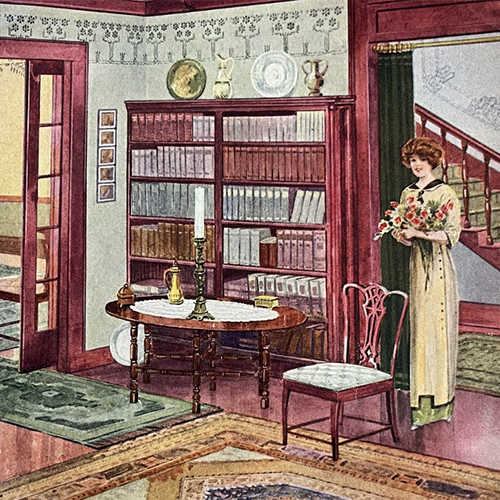
A drawing of a woman in a victorian dress holding a bouquet of flowers and entering a room with bookshelves.

Catalog-cover-story

Shopping for History

Thumb through decades of archived catalogs with us! Archivist Isabel Planton pulled some unique items to showcase in this shopping sideshow.

Back to Fall 2026 Issue

Fancy hammocks. Ventriloquist dummies. Long underwear with health benefits.

These are just a few of the items customers could purchase from catalogues in the Bentley’s Commercial Catalog Collection. Featuring products manufactured or sold in Michigan, the earliest catalogs are from the 1870s and include items like military goods for “Sons of Veterans” of the U.S. Civil War, mining and agricultural machinery, and horse-drawn carriages. The catalogs go all the way into the 2000s, including a selection of publications from Zingerman’s Delicatessen in Ann Arbor.

The catalogs were meant to showcase what a company had for sale, either to individual customers or to retailers. Some of the pamphlets are worn or chipped but it’s amazing that they survive at all, given that their intended use probably spanned just one season, and that they would be replaced with a fresh catalog in each subsequent year.

Archivist Isabel Planton thumbed through decades of catalogs and pulled some unique items to showcase in this shopping sideshow.
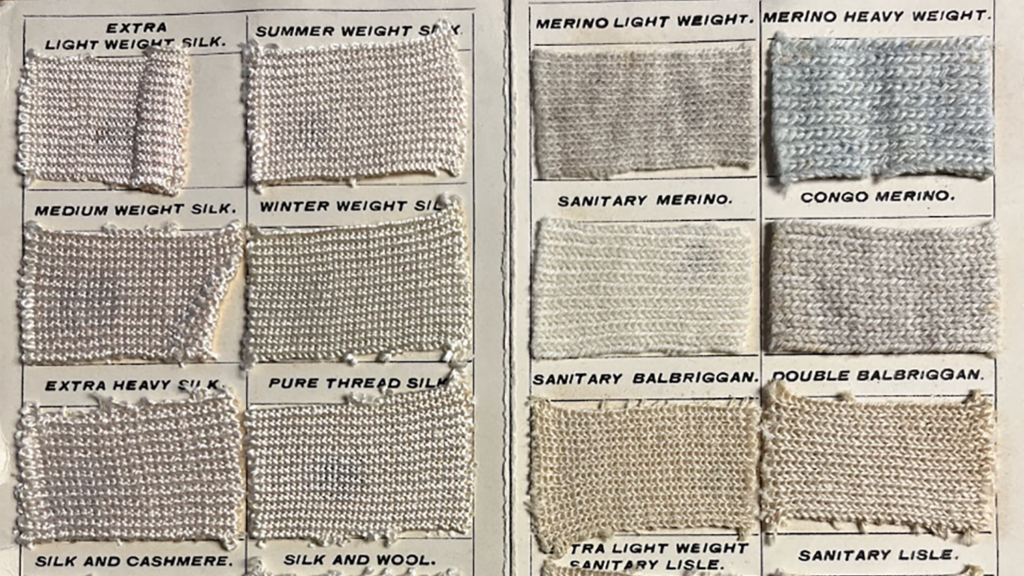
Small fabric squares in a tiled formation with labels.

Ypsilanti-Underwear-Samples

Long Underwear with Benefits

Thanks to manufacturers like Hay & Todd (later the Ypsilanti Underwear Company), the city of Ypsilanti, Michigan, was once synonymous with underwear. Hay & Todd Manufacturing’s large advertisement showing a woman in a form-fitting union suit scandalized train passengers as they rode through Ypsilanti in the 1860s. While this fabric sample booklet doesn’t include any provocative imagery, it does showcase a number of samples of silk and wool fabrics, giving modern audiences a tactile sense for the “health underwear” of the nineteenth century.

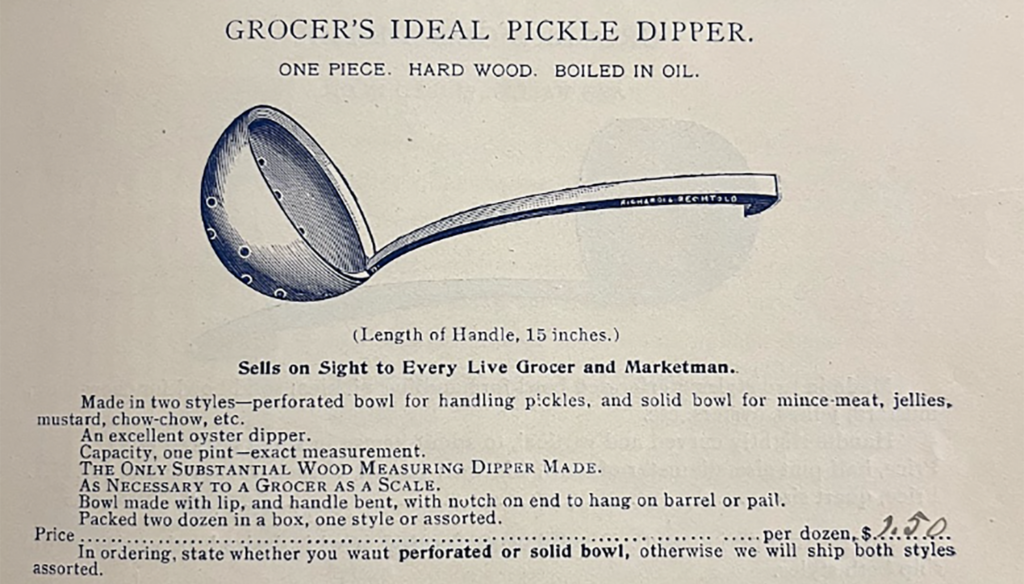
A simple drawing of a ladle, labeled "Grocers Ideal Pickle Dipper" from the Bentley Historical Library's catalog collection.

An Ideal Pickle Dipper

Henry Richardi and Frederick Bechtold’s business in wooden tools for the kitchen and laundry capitalized on Michigan’s lumber industry. Listings feature empty space for a salesperson’s annotations of prices and discounts. The “Grocer’s Ideal Pickle Dipper” is an excellent example of the niche items produced by this turn-of-the-century manufacturer. As the advertisement notes, this dipper’s use extends beyond just pickles. One could also use it to measure exact servings of mince-meat, jellies, mustard, chow-chow, oysters, or, certainly, any other condiment or finger food.

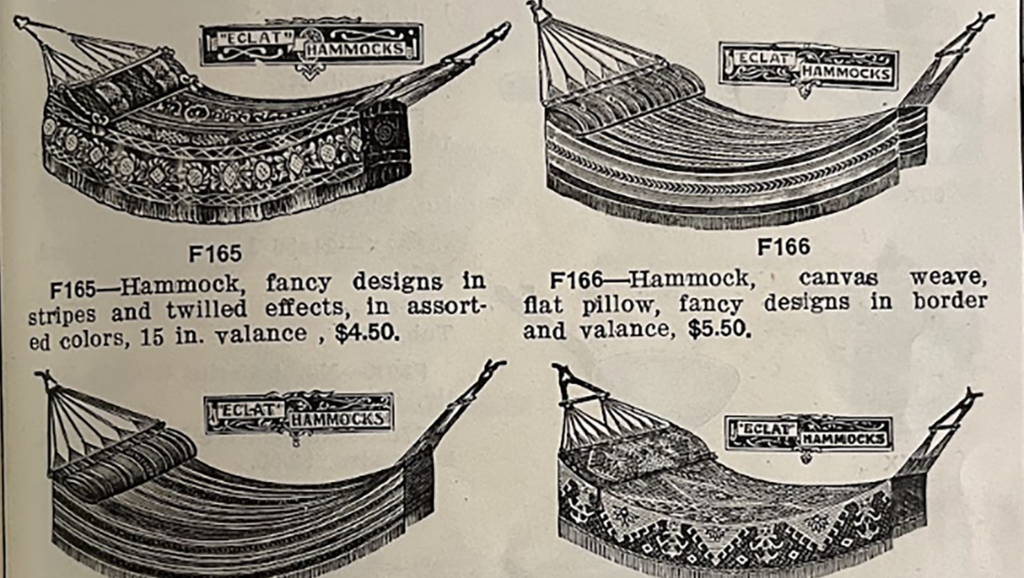
Black and white drawings of four hammocks from the Bentley's catalog collection.

Fancy-Hammocks1

Hannah and Lay Mercantile Company, Traverse City, Michigan. Catalogue of men and women’s clothing, furniture, kitchen utensils, agricultural equipment, Spring-Summer 1908.

Fancy Hammocks

“The Big Store” of the Hannah and Lay Mercantile Company was a massive general store in Traverse City, from the 1880s until 1928. This 1908 spring-summer catalog includes welcome messages in English, German, Polish, Czech, and Swedish. Among a multitude of products, the catalog offers different designs, patterns, and colors of hammocks, and features a line drawing of a woman in full Victorian dress dozing peacefully. The hammocks ranged in price from $2.50 to $7.40.

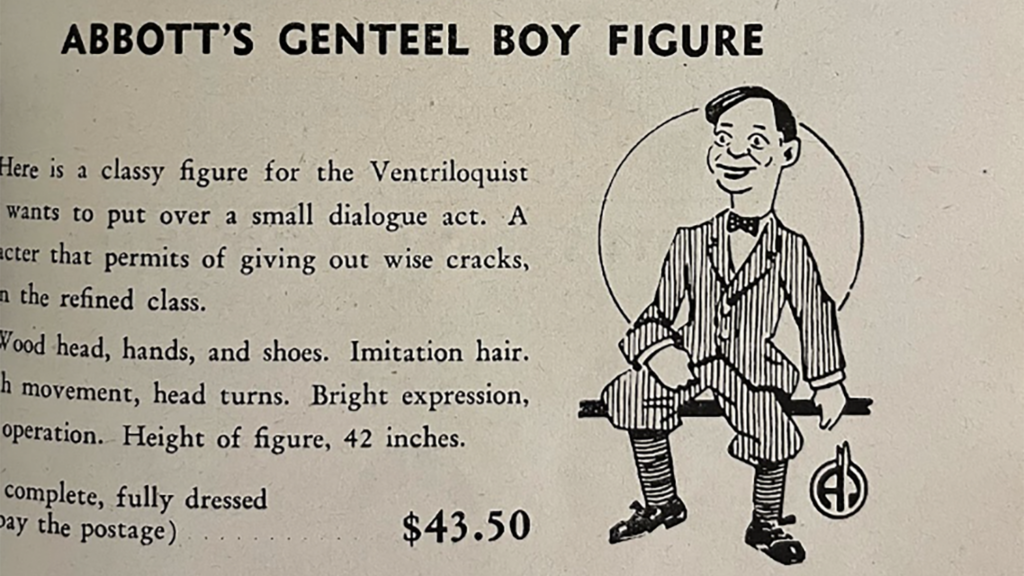
A black and white drawing of a ventriloquist doll on the right side of the page with the headline "Genteel Boy Figure."

Genteel Boy Figure

Abbott’s is still in business in Colon, Michigan, which is known as the “Magic Capital of the World.” If you’ve ever wondered where ventriloquists and other magicians buy their specialty supplies, Abbott’s is a great example. The Genteel Boy Figure is only one of several models available in the “Vent” section of their catalog. Note that the $43.50 price for this figure includes postage, a bargain in any era. This catalog is massive, with more than 800 pages of supplies for close-up magic, card tricks, flower magic, illusions, and more.

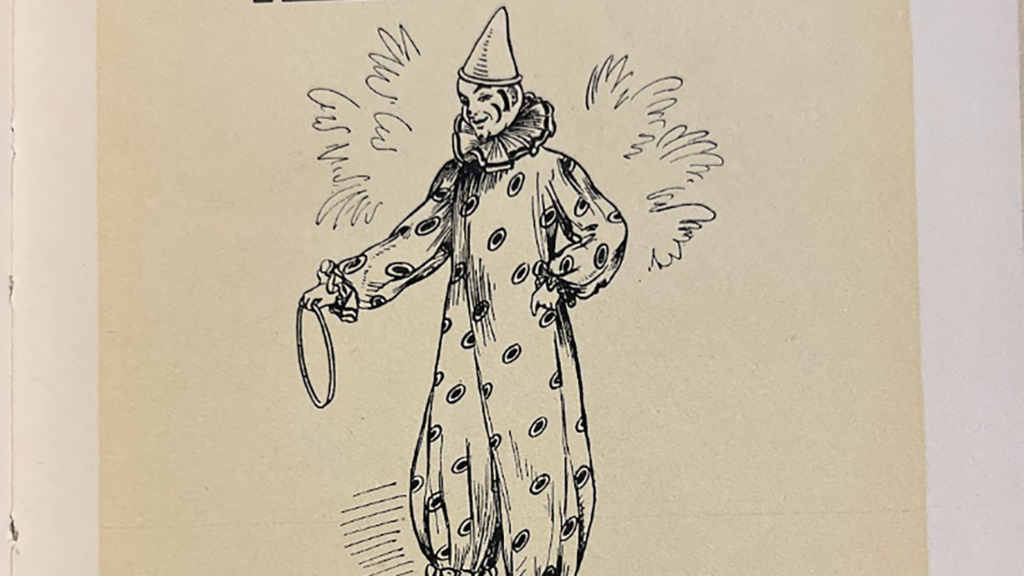
A black and white drawing of a clown in a spotted costume wearing a pointed hat and holding a small hula hoop.

Clown-Costume1

Clown Costumes

Do you need to outfit the cast of a theatrical production? Whitney Scenic & Costume Company of Detroit offers a wide variety of costumes and accessories. In the introduction, the catalog encourages customers to write to them if they are looking for something not listed. The company even offers to mail back a sketch and make custom pieces. This clown costume comes in three styles: spotted, striped, or with pom poms. While some of the costumes sold in this catalog promote what modern viewers may recognize as offensive cultural stereotypes, this clown costume is timeless and charming.

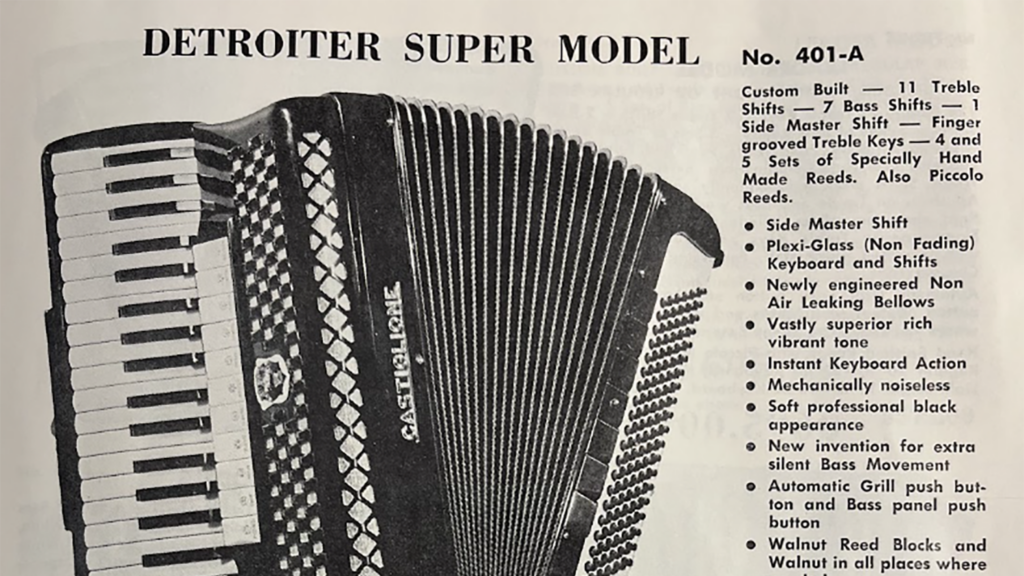
A black and white catalog page showing an accordion musical instrument wtih the headline "Detroiter Super Model" above it.

Detroiter Super Accordion

Should you find yourself ready to invest in a super accordion in Detroit during the instrument’s heyday, look no further than the Castiglione Accordion Company. When this catalog was published around 1968, the company had been in business for almost a half century. The “Detroiter Super Model” weighed 24 ½ pounds and cost $1,700. When adjusted for inflation, that would be a price tag of nearly $17,000 dollars today.

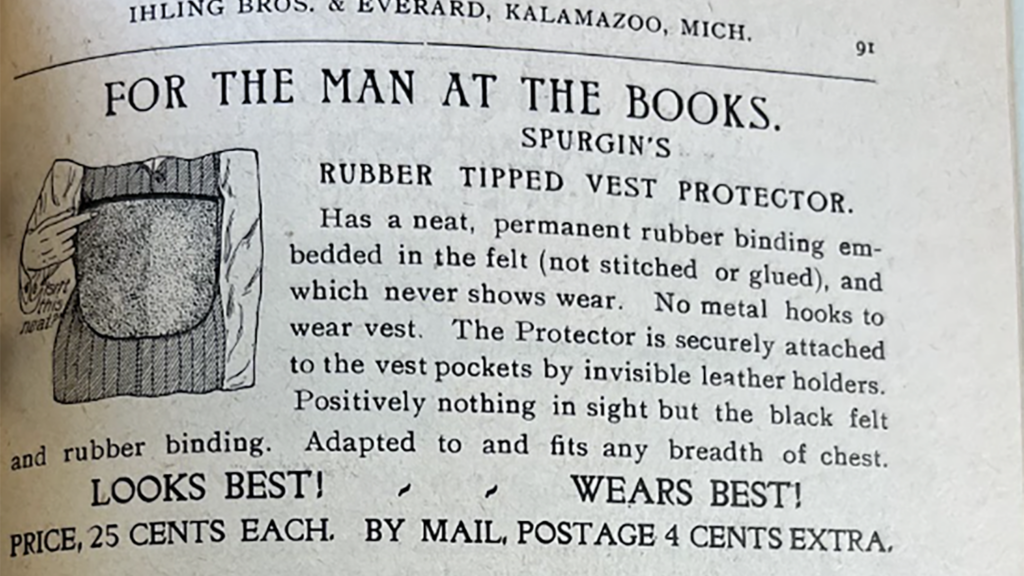
Black writing on a white page advertising a protective vest for office workers in the early 1900s.

Protective-wear

Protectors and Shades

The Ihling Bros. & Everard of Kalamazoo, Michigan offered what could be considered PPE (or personal protective equipment) for the office worker of 1901. Think protectors to keep ink away from vests or sleeves, or a green celluloid eye shade to protect workers’ vision. Not only would the discerning clerks in the offices of townships, villages, cities, and school districts look swell in this dapper equipment, they also could work in comfort knowing that their clothing and eyes would be safe from potential hazards. 

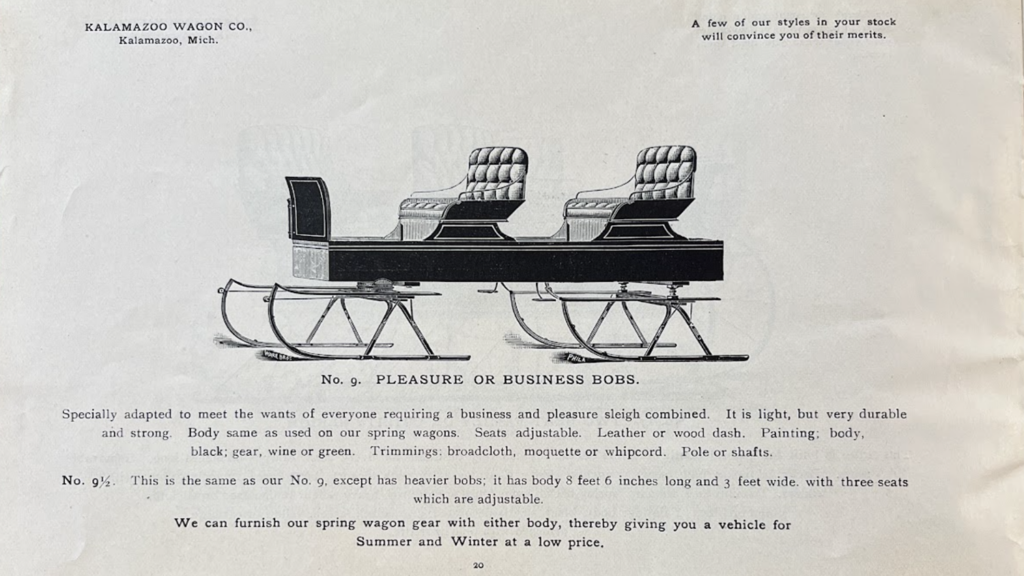
Black and white catalog page featuing a simple drawing of a horse-drawn sleigh from the early 1900s.

Horse-Drawn Sleigh

Detroit may be the Motor City, but many carriage and sleigh manufacturers operated in Michigan around the turn of the last century, including the Kalamazoo Wagon Company. This “Pleasure or Business Bobs” is a versatile vehicle “specially adapted to meet the wants of everyone requiring a business and a pleasure sleigh combined.” It features adjustable seats and even comes in a slightly larger three-seat model. And, as the advertisement notes, the wagon body can be mounted on “bobs” or pairs of runners (as pictured), or it can be furnished with wagon gear. Thus, this same vehicle body can be built as either a winter sleigh or a summer wagon, depending on your transportation needs.

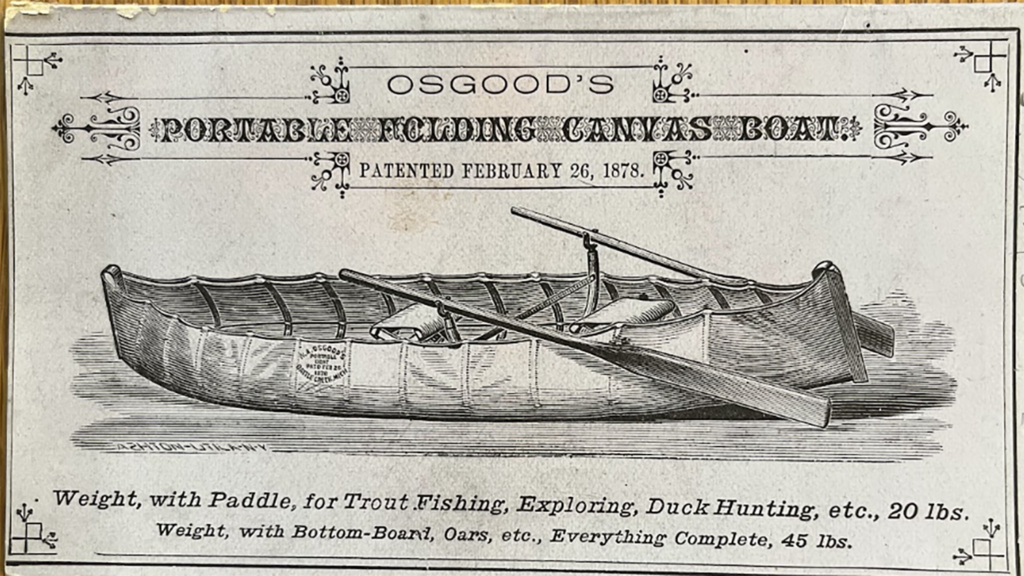
Black and white advertisement from an old catalog showing a simple drawing of a canoe that is labeled "Portable folding canvas boat."

Folding Canvas Boats

While it’s unsurprising that outdoor enthusiasts might buy a folding or inflatable kayak in the 21st century, did you know that similar products were for sale in the 1880s? Unlike most of the other catalogs featured here, this catalog is focused on just a few products: the portable folding canvas boat; and folding minnow and fish crates. After a few pages describing the collapsible boat, there are ten pages of testimonials!

One of the the shorter letters:

Valparaiso, Ind., March 7, 1878

Messrs. Osgood & Chapin:-

Gents: I have never written you concerning the satisfaction with which I have used your Canvas Boat. It has more than proved itself to be Staunch, Seaworthy, and wonderfully convenient. Two of us took it into our light buggy and visited the small lakes in our country, where a heavy boat could not be carried. I believe you have the best portable boat yet invented. I have seen them all.

Yours truly, 

W. H. Holabird

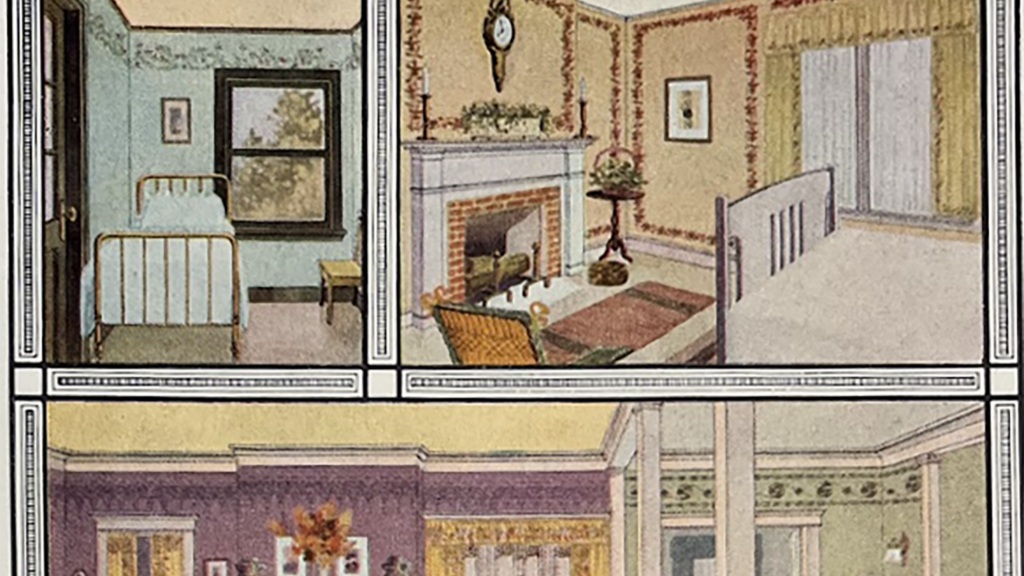
A page from an early-1900s catalog shows different rooms with pastel-colored walls.

Hygienic Wall Coatings

In case Ypsilanti health underwear wasn’t enough to fend off illness, Alabastine and Alabasco wall coatings are advertised as a more sanitary option than wallpaper for home decorating:

“Wallpaper, as everyone knows, collects germs, breeds disease and spreads contagion.” With the flu pandemic of 1919 fresh in the collective memory, perhaps hygienic wall coverings seemed like an effective marketing angle.

A key ingredient in Alabastine is calcined gypsum, mined near Grand Rapids. The product comes in “plain, soft tints” that were “delightfully clean, cheerful and truly artistic,” as opposed to the “glaring, crude colors” created by competitors. The Alabastine Book also includes stencils for decorating and pages of examples of color plans for every room of the house.