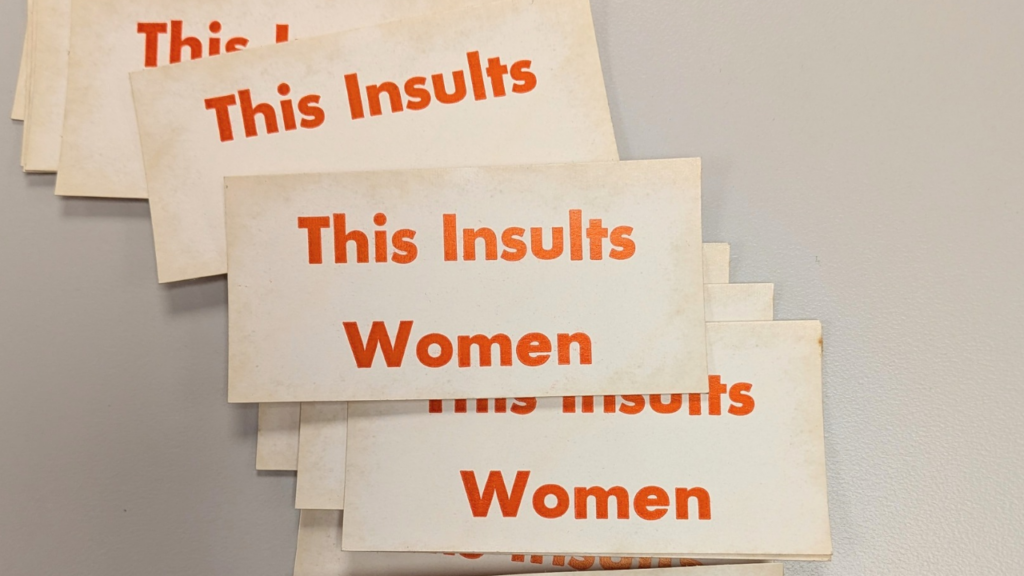
When Jeff DeMoss found a pile of stickers tucked inside a box at the Bentley, he immediately snapped a photo. He knew each sticker was a window into local history—and he knew his students would be interested.
The stickers were meant to be stuck to books that discriminated against women, as part of a feminist protest tactic. Every one was printed with the words: “This insults women.”
DeMoss, a social studies teacher at Huron High School in Ann Arbor, found them preserved in the papers of Detroit artist and feminist Patricia Burnett. Now, he will use these stickers and more from the Bentley to help share the history of second wave feminism with his eleventh and twelfth-grade students.
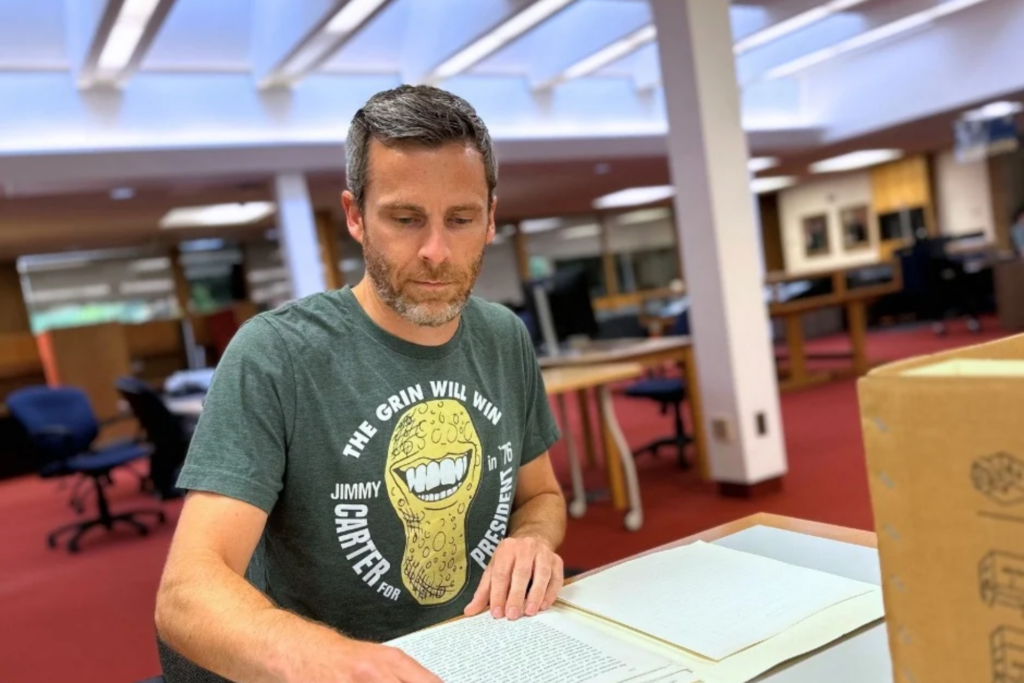
As one of the first teachers awarded a research fellowship from the Bentley Historical Library to support K-12 educators, DeMoss was excited to visit the reading room and dig into this movement’s history. He explored boxes and folders from the Patricia Burnett papers, the Underground Newspaper collection, women’s liberation newspapers, and more.
In the process, he found all kinds of details for his students to see.
“The major issues and organizational logistics are right there in the documents. Protest movements take a lot of work,” he says. Here, that work is preserved in handwritten letters and newspaper clippings.
By showing students this history through a local lens, he hopes to make it feel more personal and real. He’ll use his findings for his current class about historical protest movements, highlighting topics like the Civil Rights movement and the history of feminism.
As a historian, DeMoss enjoys showing students how to work with historical documents, and helping them piece together the puzzle of the past.
Some of his research fellowship funds will go toward creating high-quality copies of papers and photos from the archives for his students to use in the classroom. He also plans to go a step further by bringing his students to visit nearby historical libraries, including the Bentley, to see firsthand accounts of this history, preserved in primary sources, for themselves. This way, they will get hands-on experience working directly with historical papers and photos.
“Primary sources invite students to think and work like a historian,” DeMoss says. “Coordinating with archives and libraries for kids to get to do primary research at this level is a game changer.”
“I’m a teacher and a historian. To be able to both do history and teach it is really exciting.”