“Of course, the skeptics [will] say that … some student from Michigan Tech probably dreamed up the tracks as he went along with his paint can,” Charles wrote, “but who wants to spoil a good story by believing it is just a hoax?”
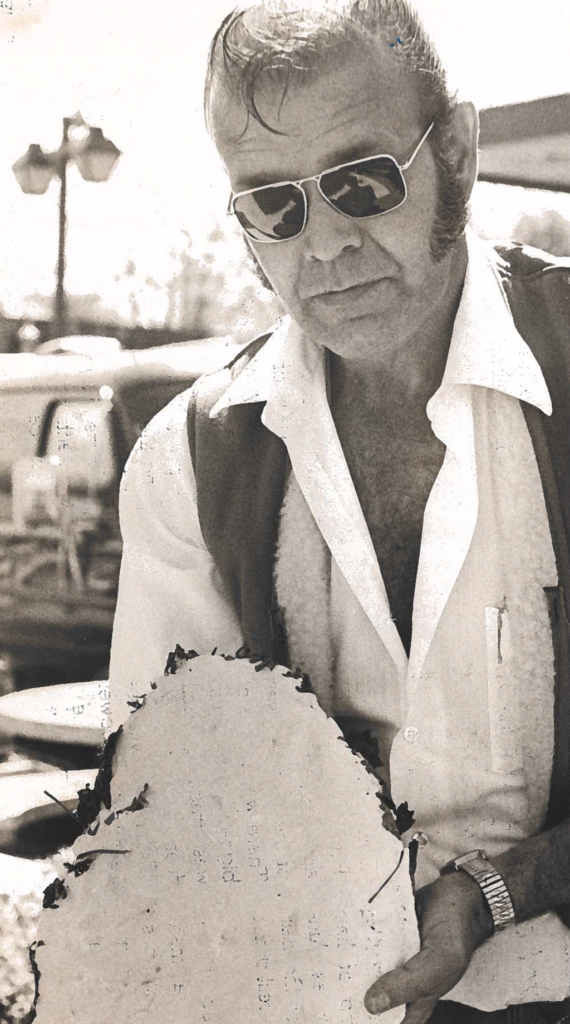
After 1974, Charles began clipping and saving articles about Bigfoot—both in Michigan and elsewhere, including Oregon, Florida, and Canada. In April 1977, he saved a Record-Eagle story about a Michigan man named Wayne King who was a GM factory worker by day and a Bigfoot hunter in his spare time. King was specifically looking for Bigfoot along the Platte River near the tiny village of Lake Ann in the northwest Lower Peninsula.
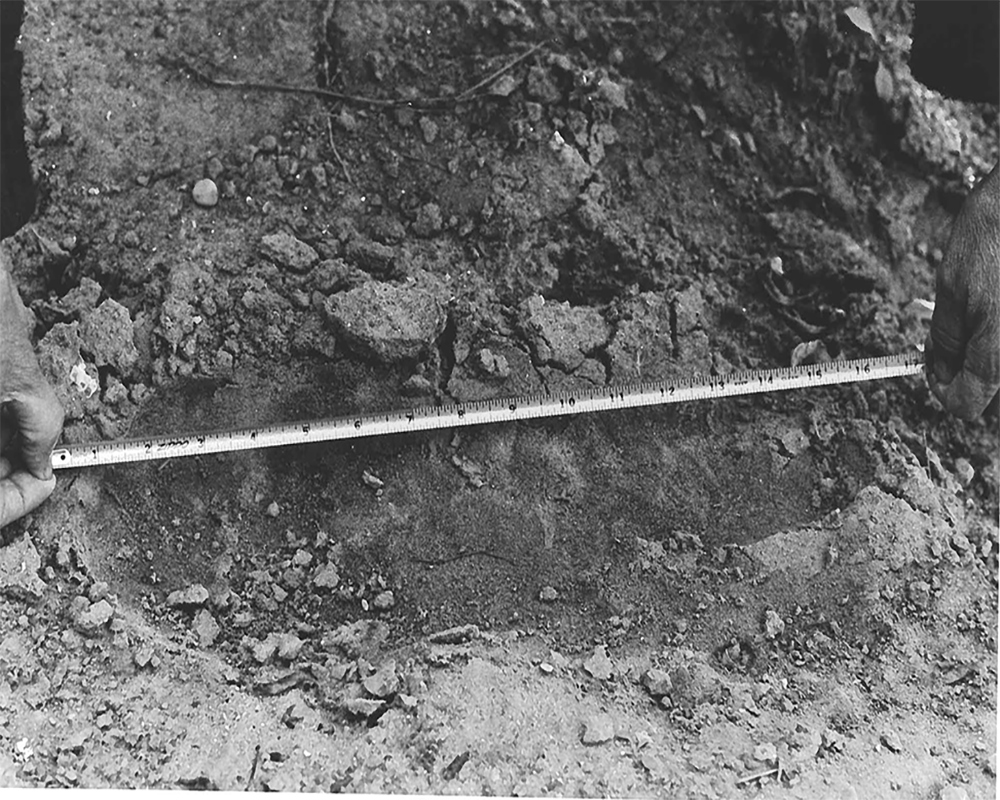
For his Platte River investigation, King was following up on a report from a few years prior, when a local resident named Richard Clark and his wife claimed they found 17-inch footprints and hair in the snow.
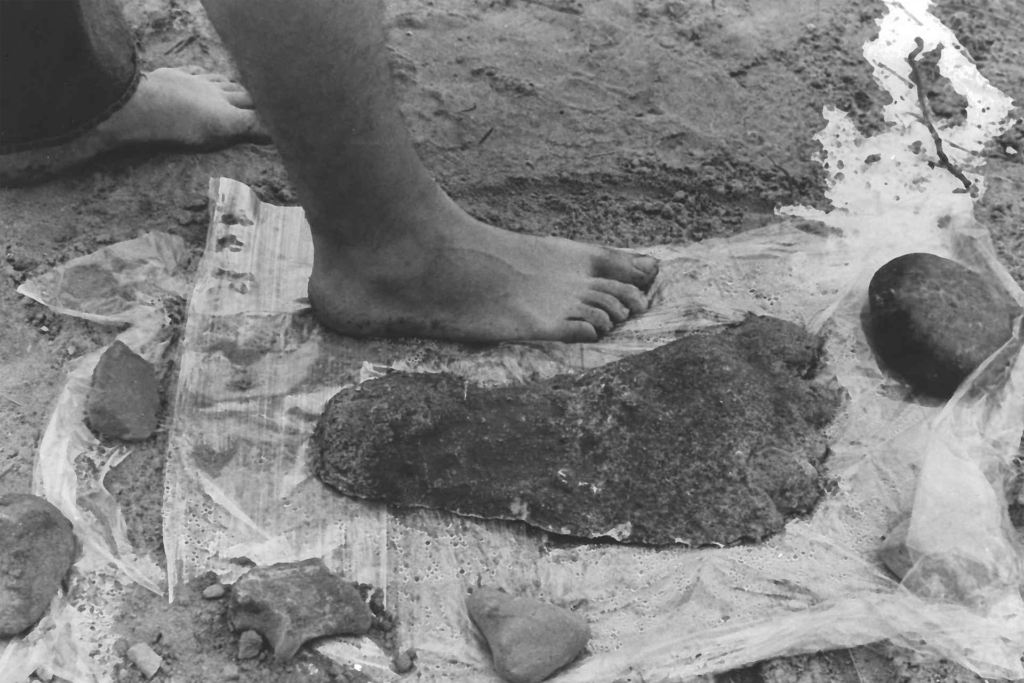
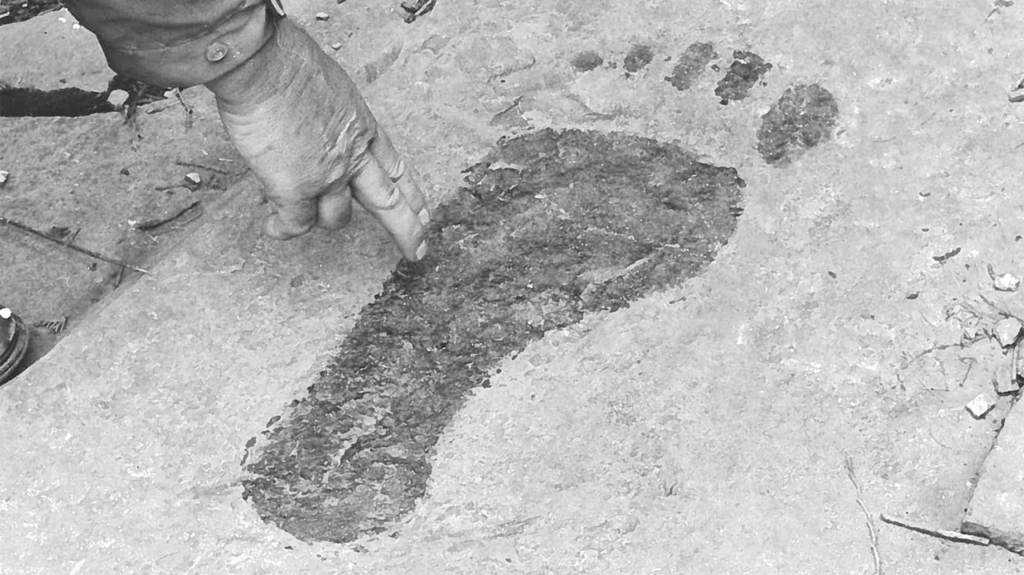
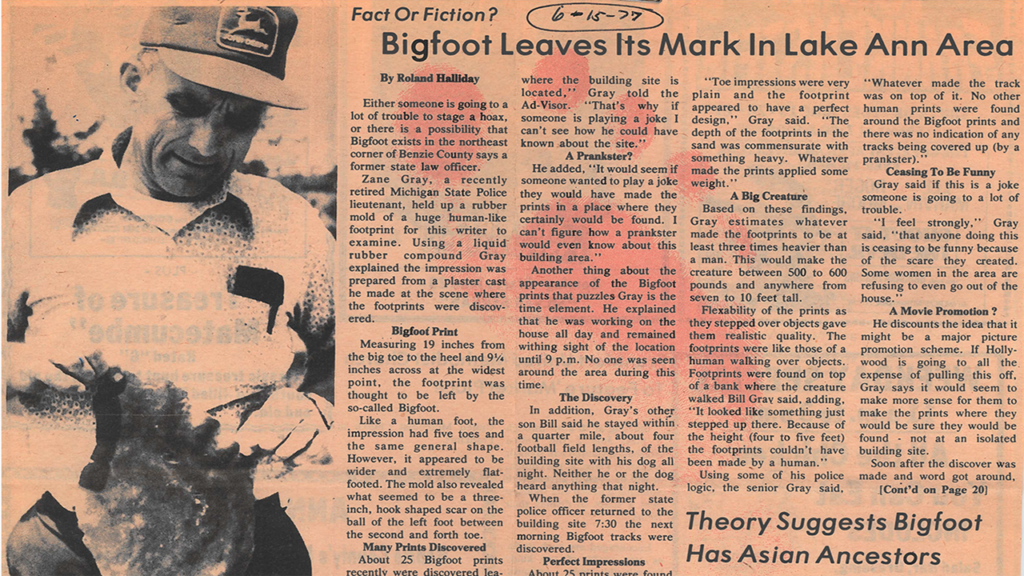
Two months later, Charles clipped a June 17, 1977, article from the Benzie County Ad-Visor titled “Bigfoot Leaves its Mark in Lake Ann Area.” At the center of the story was a retired sheriff, Zane Gray, and his son, Dave, who had discovered 19-inch tracks on a building site about 800 feet off the road.
“Only about a dozen people knew where the building site was located,” said Zane, who created a plaster cast of the footprint and, later, a rubber mold. “[A]nyone doing this is ceasing to be funny because of the scare they created.”
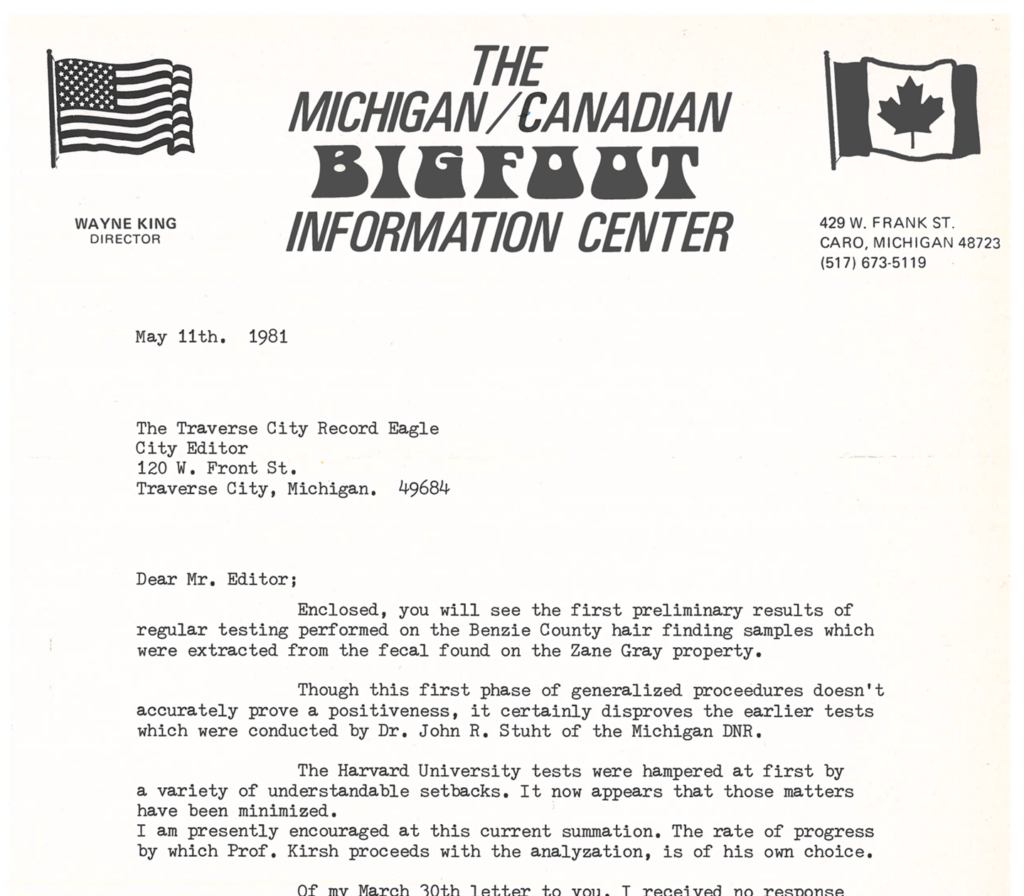
The story also mentions that King, the Bigfoot hunter, had visited the site and had recently established the Bigfoot Information Center.
Soon, Charles and King would cross paths directly.
The King of Bigfoot Research
“Hey Gordie, how come you haven’t been writing anything about Bigfoot?”
So begins Charles’s Record-Eagle column from July 1977. He noted that readers thought Bigfoot was an “outdoor subject” so Charles “should be getting involved as much as a lot of other folks. Maybe even more so.”
In the piece, Charles noted that he was contacted by King, whom he described as the “Flint autoworker who likes to prowl around Michigan looking for signs of the Michigan Sasquatch.”
He said that King wanted any information Charles had about the Platte River sightings and wondered why Charles wasn’t giving the story more column inches.
Charles had “reservations,” according to his column—both about the veracity of the claims and about people trying to turn a profit by selling T-shirts with Bigfoot-related imagery. He mentioned a restaurant in Honor, Michigan, that was offering to pay $0.79/pound “for any genuine Bigfoot brought in. No mention is made whether that is dead or alive, but hopefully it would be alive.”
Charles joked about the timing of a local community theater putting on the play Barefoot in the Park.
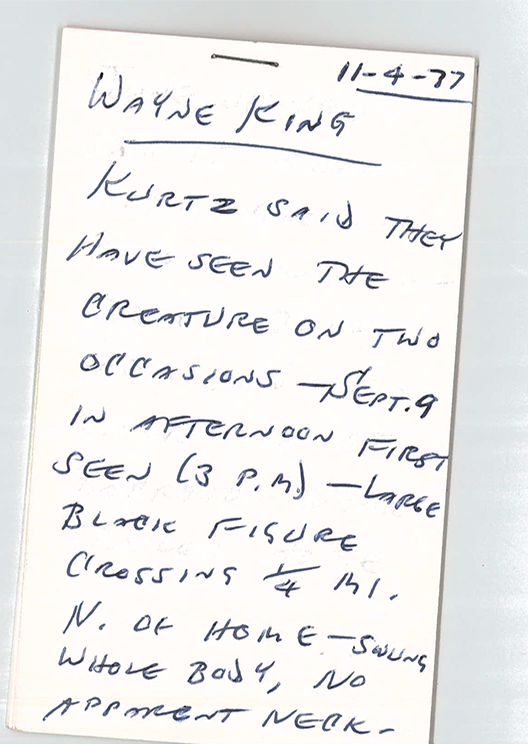
But as tongue-and-cheek as Charles’s column was, he didn’t dismiss Wayne King outright. Archived in his collection is a small rectangle of hand-written notes from a conversation he had with King just a few months later, in November 1977.
The notes are focused on what King claimed were verified sightings of Bigfoot in Michigan: tracks, creatures, and, in one case, a strange skeleton discovered by a duck hunter.
King followed up with Charles a few days later with the details of each case written on “Michigan Bigfoot Information Center” letterhead.