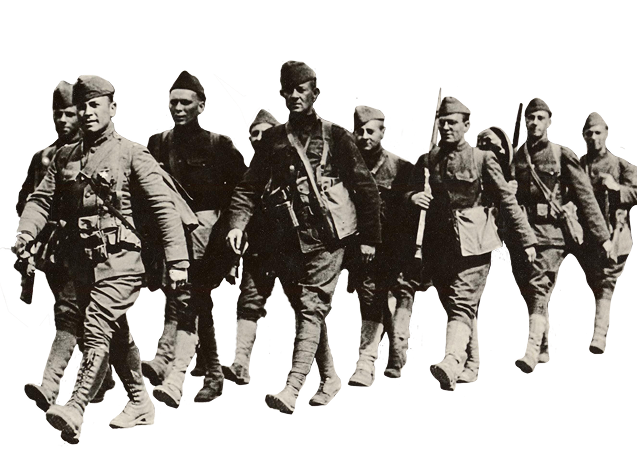
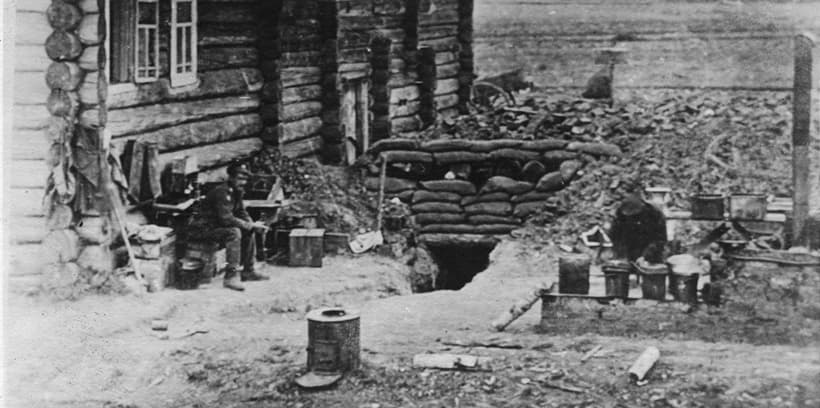
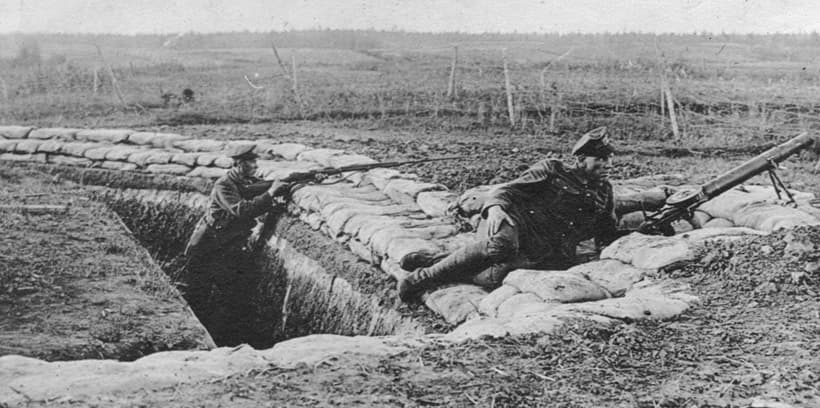
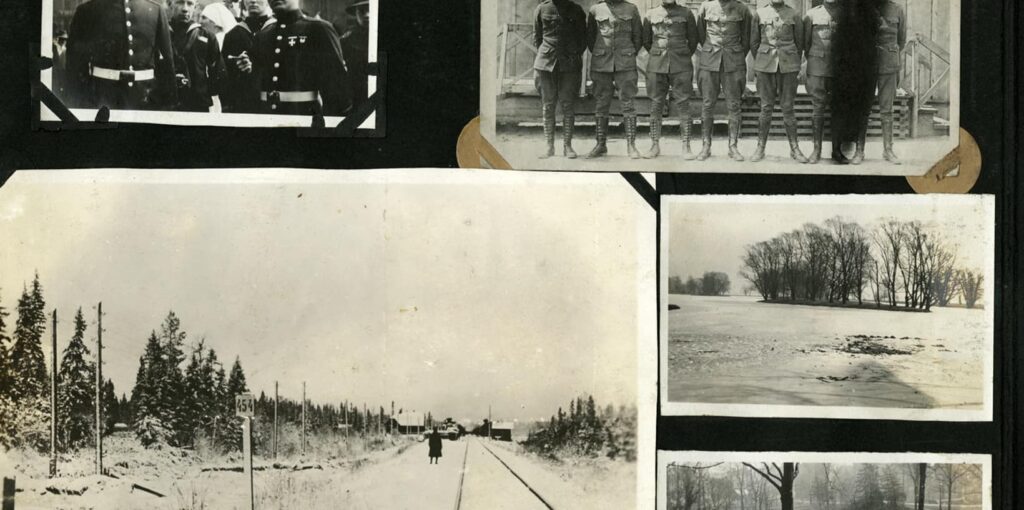
A winter of fighting Bolsheviks and wondering why they were still in combat when the war with Germany had ended led to severe morale problems among the American troops, including an alleged mutiny in March 1919 by members of one company in Archangel, and the presentation of an antiwar petition by members of another company in the same month. The troops were ready for the new American commander who arrived at Archangel in April 1919 with orders to withdraw. As soon as navigation opened in June, the American forces left northern Russia. British troops withdrew a few months later, but the anti-Bolshevik government they left behind held the city until February 1920.
In 1922, veterans of the campaign held their first reunion in Detroit and formed the Polar Bear Association to preserve their comradeship and perpetuate the memory of their expedition. The organization was active at least until 1983, when 22 surviving members of the association held a luncheon meeting in Detroit.
Public attention was drawn to the expedition in 1929, when two commissions, one appointed by the governor of Michigan and the other organized by the Veterans of Foreign Wars for the War Department, went to Archangel to recover the bodies of American soldiers buried in Russia. The remains they found were returned to the United States and reburied with honors in the Polar Bear Memorial at White Chapel Cemetery, Troy, Michigan.
For over twenty years the Michigan Historical Collections has actively collected the personal papers of officers and enlisted men involved in the Polar Bear Expedition. In 1965, the library published Michigan’s Polar Bears, in which Richard Doolen portrayed the experiences of the men who served in Archangel using excerpts from the collections held by the library at that time. Since then, the number of manuscript collections held has doubled, and additional photographs, maps, and printed materials have been added.
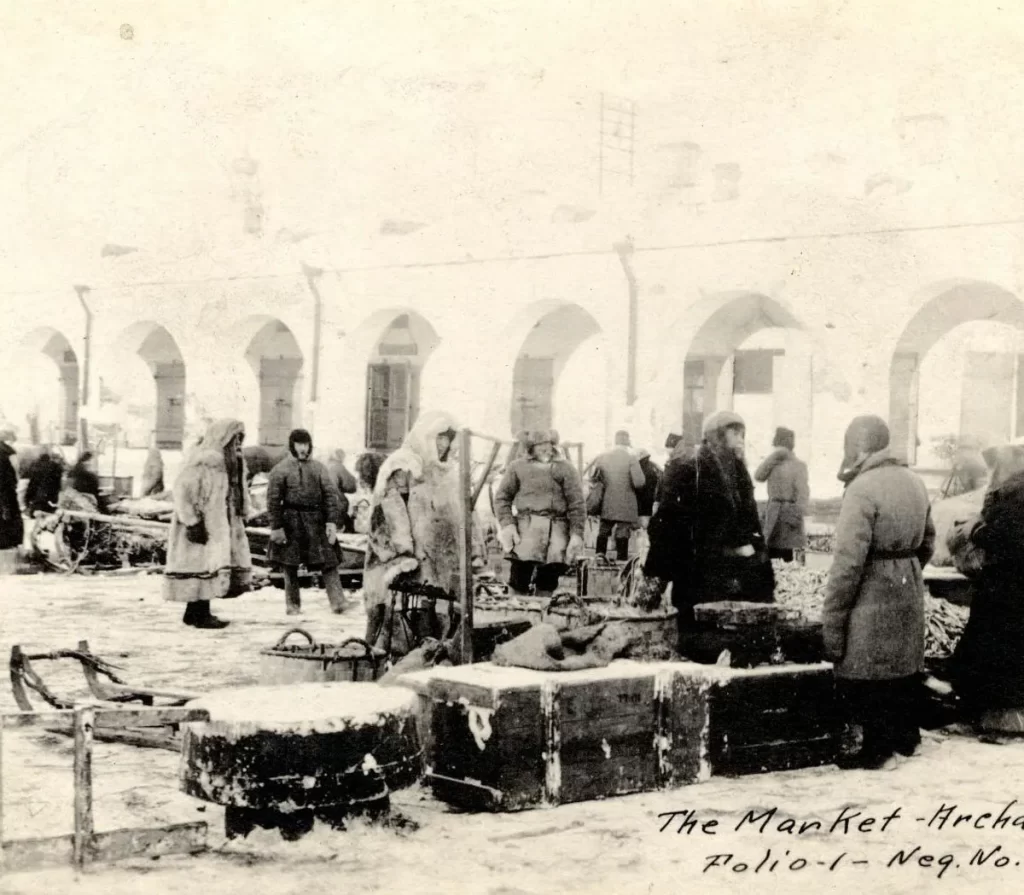
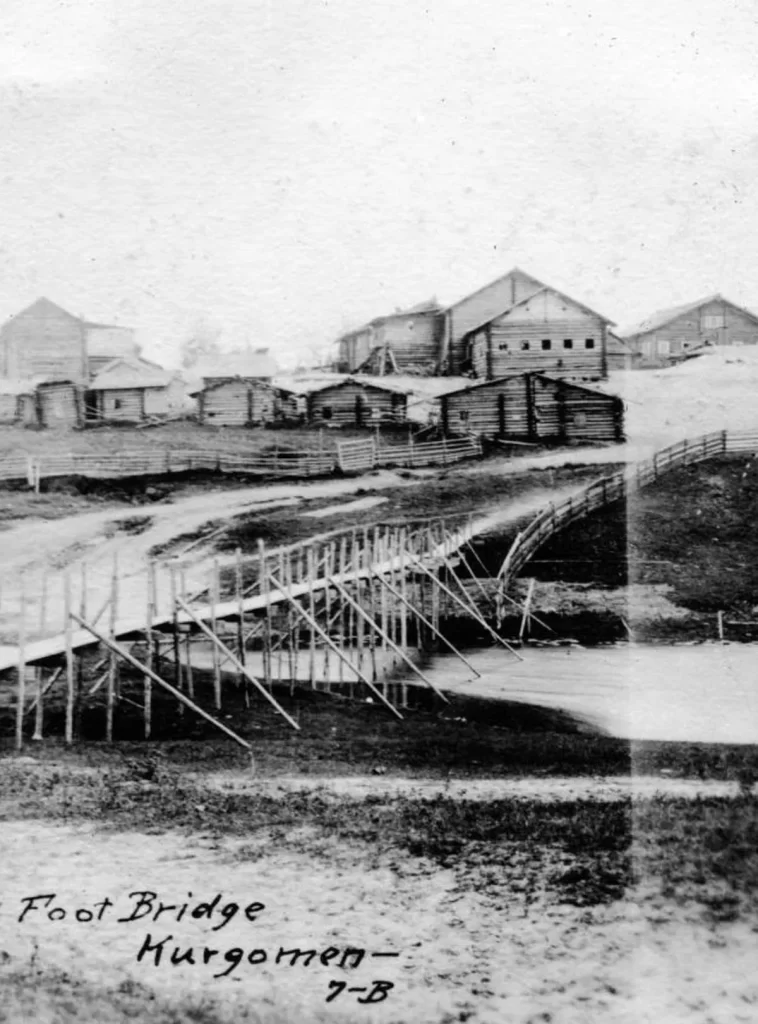
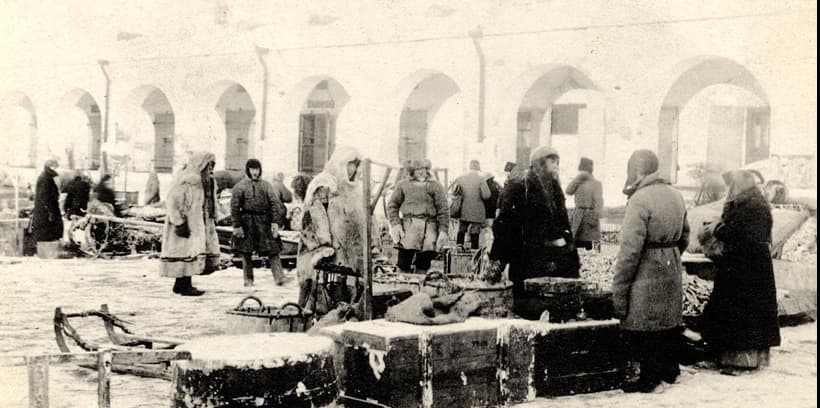
Researchers can obtain an overview of the campaign in Ernest Halliday’s The Ignorant Armies (New York, 1958) which, along with other secondary accounts, is not listed in this guide. Published primary sources listed in this guide that provide a general view of the campaign include The History of the American Expedition Fighting the Bolsheviki, compiled by Joel R. Moore, Harry H. Mead, and Lewis E. Jahns from the reminiscences and diaries of many participants, or from the bitter accounts of Harry J. Costello, Why Did We Go To Russia?, and John Cudahy, Archangel: The American War With Russia. The map collection of Frederick C. O’Dell covers all the areas of military activity (except the Murmansk railroad) and the photograph collections of Jay H. Bonnell, Joel R. Moore, Frederick C. O’Dell, and the U. S. Army Signal Corps provide general information about the terrain and people involved. The microfilm edition of the records of the American Expeditionary Force, North Russia, is the most comprehensive manuscript collection on the expedition held by the Michigan Historical Collections.
The library’s collections are strongest for men who served in the Vaga and Dvina River areas. Descriptions of life in Shenkursk, the fighting at Ust Padenga, and other incidents along the Vaga River are found in the diaries of Edwin L. Arkins, John S. Crissman, Kenneth A. Skellenger, and Edward Trombley; Henry Katz’s report; Godfrey J. Anderson’s reminiscence; Dorothea York’s book; and Dan Steele’s novel.
Actions along the Dvina River, especially the fighting at Toulgas, are described in the diaries of Frank W. Douma, Silver Parrish, Clarence G. Scheu, and Gordon W. Smith; the diary and correspondence of Walter I. McKenzie; Henry Katz’s report; and William Henkelman’s map.
The Emtsa River area and action at Kodish are described in the Fred Kooyers diary in the George Albers collection and by Charles B. Ryan’s diary and correspondence.
Edward Flaherty’s diary, Roy Paul Rasmussen’s diary and reminiscence, and Earl Fulcher’s statement describe the Onega River area and the fight at Bolshie Ozerki.
Life in Archangel is recounted in Charles E. Lewis’s diary and in the Walter I. McKenzie collection.
Morale problems among the troops are mentioned in many of the collections, especially the diaries of Cleo M. Colburn and Silver Parrish.
Godfrey J. Anderson’s reminiscence, Henry Katz’s report, and Walter I. McKenzie’s papers are useful sources of information on medical practice during the expedition.
The special work of the 310th Engineers in construction and mapping are described in Rodger S. Clark’s correspondence, Jay H. Bonnell’s photographs, Louis E. Schicker’s photographs, and Frederick C. O’Dell’s maps, plans, and photographs.
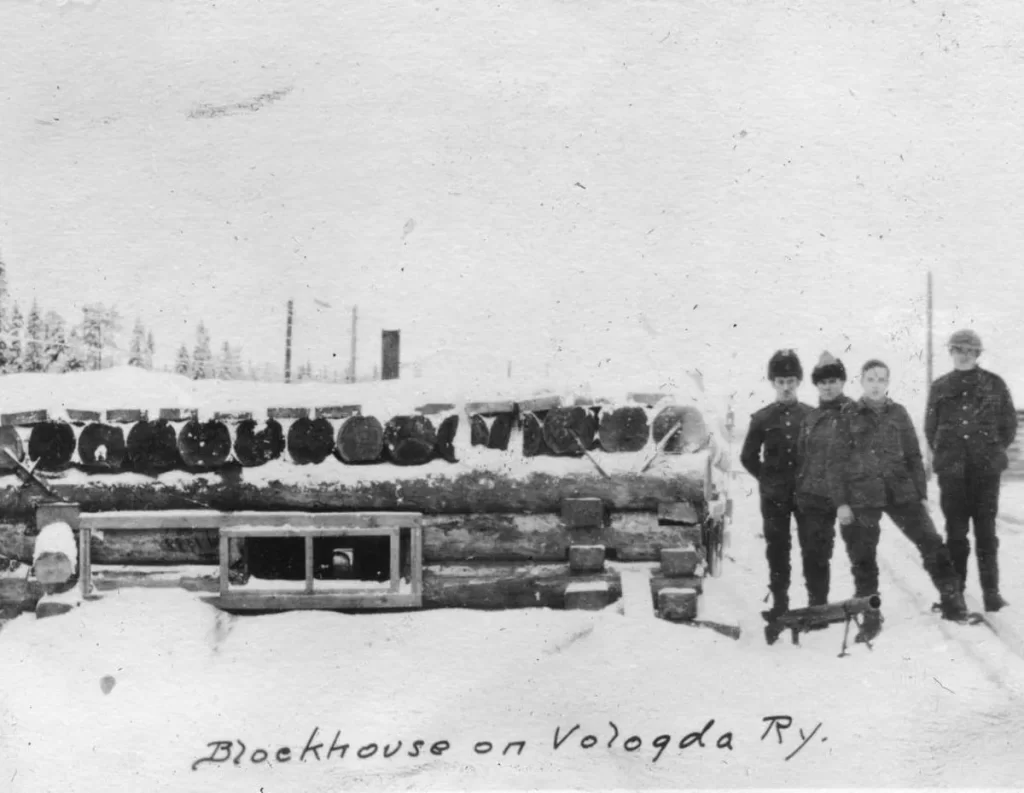
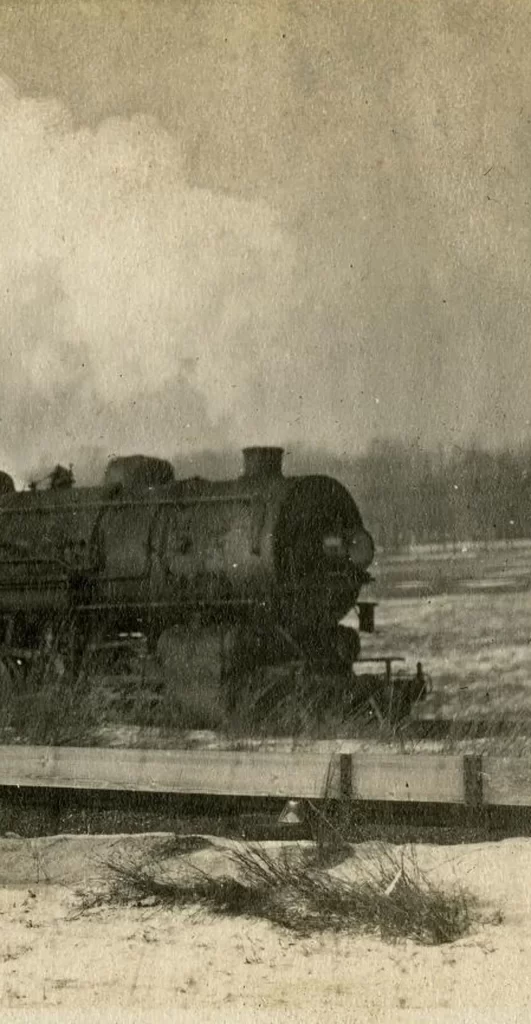
The W. C. Giffels letter in the Frank B. Kiel papers describes the Archangel- Vologda railroad, while John E. Wilson’s book and Frank B. McGrath’s photographs describe the Murmansk railroad.
The 1929 mission to recover the remains of men buried in Russia is described in the diaries and reminiscences of Walter F. Dundon and Michael J. Macalla.
Related collections in other repositories dealing with the expedition as a whole include the records of the American Expeditionary Force, North Russia, 1917-1919 (14 linear feet), part of Record Group 120, National Archives and Records Administration; the papers of American commander George E. Stewart, 1918-1940 (1 box), at the U. S. Military Academy Library, West Point, N. Y.; and a manuscript history of the Archangel expedition by John G. Gregory in the records of the Wisconsin War History Council at the State Historical Society of Wisconsin, Madison. Collections of the papers of officers and enlisted men in other repositories include the papers of Robert S. Simonds, 1918-1919 (51 items), leader of an Army band at Archangel, at the Western Michigan University Regional History Collections, Kalamazoo; Frederick E. Bury, 1898-1941 (1 box), an officer in the American Expeditionary Force, North Russia, and Henry Cook, 1917-1921 (1 box), a private in the 339th Infantry, at the U. S. Army Military History Institute, Carlisle Barracks, Pa.; Clarence J. Primm, 1918-1919 (9 items), a lieutenant in the 339th Infantry, excerpts from letters of Lieutenant Malcolm K. Whyte in the papers of William F. Whyte, 1851-1927 (1 box), and letters from soldiers in Archangel in the papers of Carl R. Fish, 1891-1932 (15 boxes and 2 file boxes), all at the State Historical Society of Wisconsin.
The American intervention in Siberia, undertaken at about the same time as the Archangel intervention, is much better documented, both in published and manuscript sources. For published studies, see Robert J. Maddox, The Unknown War With Russia: Wilson’s Siberian Adventure (San Rafael, Calif., 1977); Betty M. Unterberger, America’s Siberian Adventure, 1918-1920 (Durham, N. C., 1956); and John A. White, The Siberian Intervention (Princeton, 1950); among other works. Important manuscript sources are found at the Hoover Institution, Stanford University; at the U. S. Army Military History Institute, Carlisle Barracks, Pa.; and at the National Archives.
(The preceding is revised from the introduction to The Polar Bear Expedition: A Guide to the Resources in the Michigan Historical Collections compiled by Leonard A. Coombs and published in 1988 as Number Eleven in the Bentley Library’s Bibliographical Series. Copies of the bibliography are available from the library.)