
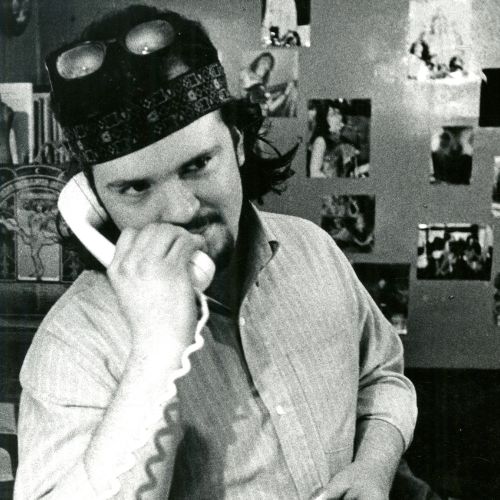
Jeep Holland may have been kicked out of the University of Michigan, but it was only because he couldn’t major in rock and roll.
Just 10 months after he left U-M, 12,000 screaming fans had crowded into Detroit’s Cobo Arena, where the band Holland managed, the Rationals, was stealing the show at the 1966 charity concert put on by WKNR, one of the city’s most popular radio stations.
Their cover of the song “Respect” had catapulted them to the top of the charts in Michigan, and Holland had successfully shopped it to a national label. The endless practices and gigs were paying off for the high school quartet managed by then 23-year-old Holland.
“Girls yelled, cried, teared, and rushed the stage, just trying to get hold of a real Rational,” said the group’s official fan club newsletter, archived at the Bentley Historical Library, recounting the show.
Because of the rowdy crowd, the Rationals never made it through their set, and the frenzied fans followed them offstage and mobbed the group’s van, pulling off windshield wipers and door handles as souvenirs.
The Rationals ultimately made it to their next gig that night, and “Respect” eventually reached 92 on national charts. Rationalmania may have peaked, but Detroit rock and roll was only growing.
Behind the scenes was Jeep Holland, an East Lansing kid connected to nearly every Detroit rock and roll band who launched a national career—or tried to—in the 1960s.
Using archived records at the Bentley, it’s possible to trace his journey from teenage fan to rock-and-roll impresario.
Pop Dreams
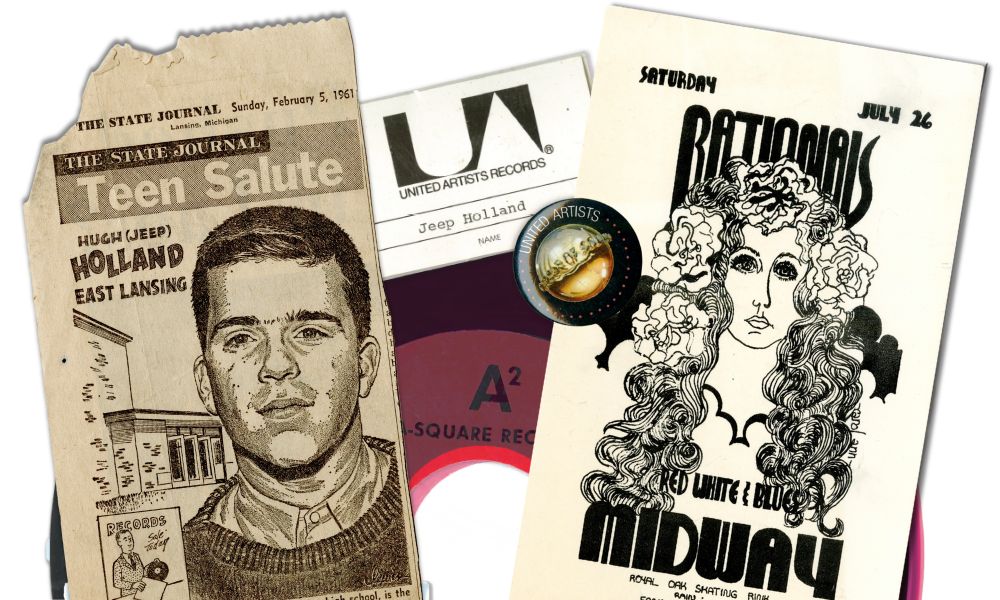
Hugh Henry Holland was born in Boston in 1943, where his father helped manage Army equipment, including the small military 4x4s commonly known as Jeeps. Holland attributed his nickname “Jeep” to friends who gently ribbed his father about the pending birth of his son—“Has the Jeep come yet?”—and it stuck.
After World War II, his family moved to East Lansing, where Holland had what appears to have been a prototypical suburban Cold War childhood. He shared a bedroom with his brother Frank, who went by Jomp, and taped pictures of Looney Tunes characters and Tarzan to the walls.
By the mid 1950s, Holland and teenagers like him in the United States had new levels of disposable income. Pop records were flying off the shelves, rock and roll became a genuine youth phenomenon, and teens were influencing American culture like never before.
In 1958, Holland favored rockers like Elvis Presley and crooners like Pat Boone and Perry Como. But he wasn’t just obsessed with music; he wanted to be a pop star.
That year, in his freshman year “Guidance” class, which focused on career and life goals, his “Career Notebook: Occupations for Later Life” is filled with his plans to become a musician. Specifically, a singer.
“A pop singer must be dedicated to sing his type of song,” Holland wrote. “Music must be his life. He must eat, drink, sleep with music. He will want to hear all kinds of music and be a living authority on not only his type of music but all branches.”
Holland played violin, even appearing on a local television show featuring talented kids. In high school he worked as an assistant to a local DJ, started collecting records, and DJ’d at teen dances. He took a job at a local record store, where his classmates and other teens would get the latest releases and recommendations.
Holland’s grades weren’t perfect but he was a National Merit Scholarship Semifinalist. Like many kids, he excelled in things he liked, and he was drawn to extracurriculars, including three years of student council, serving as senior class president.
A Student of Music
When Holland arrived on the University of Michigan campus in September 1961, his experience mirrored his high school years. He was in multiple extracurriculars, reviewing films and music for The Michigan Daily, reading news on air for WCBN, performing in the student-run theater MUSKET, and serving as an officer with the Cinema Guild.
Holland’s musical tastes shifted to rhythm and blues and grittier rock and roll.
He took a job at Discount Records at the corner of State and Liberty and worked his way up to manager as the music landscape shifted all around him. Beatlemania took America by storm in early 1964, and groups like the Rolling Stones and the Animals were selling millions of records inspired by African American artists.
Holland gained a reputation for having an encyclopedic knowledge of pop music and a record collection to match. His record store gig gave him early access to the latest releases, and his tastes began to influence the local scene. Under his leadership, Discount Records became, as music critic Dave Marsh put it retrospectively, “possibly the best store in America.”
Given all his extracurriculars and music focus, Holland’s grades were all over the board. He received high marks in English classes but failed Latin 231 three times. After a dismal fall 1965 term, he was asked by the undergraduate dean not to return to U-M.
The upside was that this freed Holland to devote even more time to music.
Detroit’s Would-Be Break-Out Band
In late 1964, at a YMCA dance, Holland met a group of high schoolers who called themselves the Rationals.
Scott Morgan’s lead vocals were forceful and confident. Bill Figg and Terry Trabandt were locked in on drums and bass. Steve Correll’s guitar work was precise.
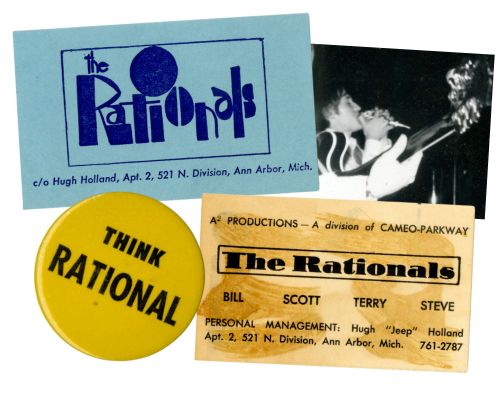
Business cards, a photo from Jeep Holland’s scrapbook about the Rationals, and a “Think Rational” button.
They became friends, and Holland signed up to manage them.
Holland booked the Rationals at local dances and fraternity parties. He started his own label, A-Square Records, and took the Rationals into the studio, acting as producer and arranger and issuing their first single in 1965. He booked the group on Canadian television’s concert show Teen Town, which featured established acts like Martha and the Vandellas.
The Rationals were getting a taste of the big time.
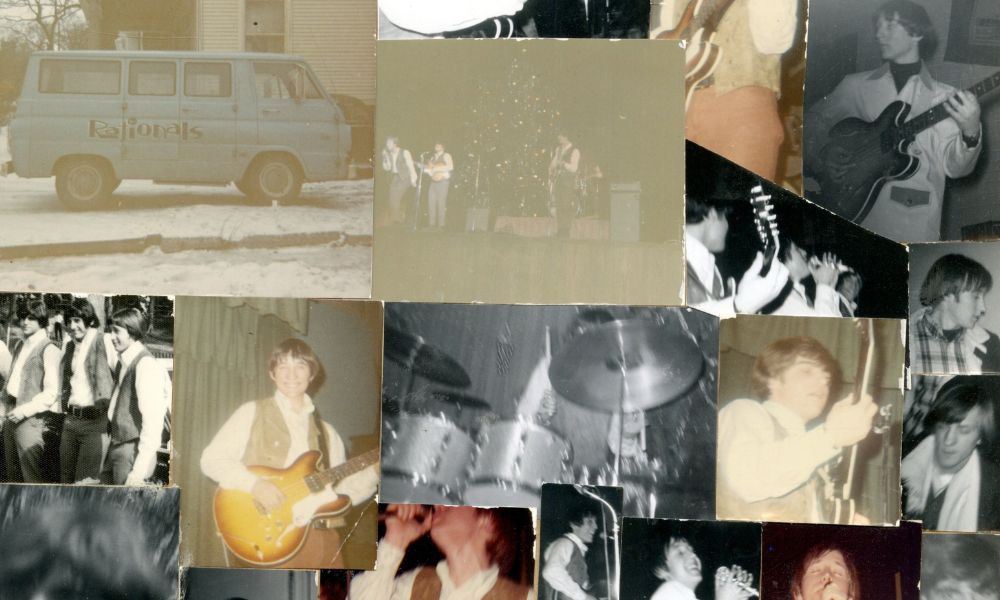
Holland arranged publicity photos, bought the group a van with their name on the side, started a fan club, and ordered boxes of “Think Rational” buttons. They were near the top of the Detroit rock scene, with the radio airplay and press appearances to match. They shared bills with other local up-and-coming acts like Mitch Ryder and Bob Seger, joined the Rascals on a string of Florida dates, and opened for Sonny & Cher in Detroit.
In 1966, at Holland’s urging, the Rationals cut a cover of “Respect,” originally written and recorded by Otis Redding (Aretha Franklin’s definitive version appeared in 1967). The song took off in Southeast Michigan, and the Rationals were soon topping local radio charts. Then came the October WKNR concert and Rationalmania.
Detroit was known for Motown, and its rock and roll scene was just emerging in the mid-1960s. At the end of 1966, the Rationals were poised to become one of the first big rock and roll acts to break out of Detroit.
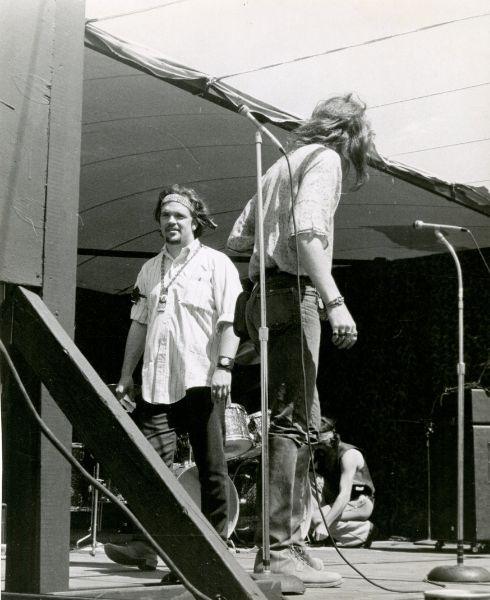
Jeep Holland getting the band warmed up circa 1967.
A List of So Many Grievances
Holland tried to leverage the local success of “Respect” with a national record deal with Cameo, but the label ended up a casualty in a complicated series of corporate manipulations. Eventually, Holland signed the Rationals with Capitol.
Holland was coordinating all aspects of the business: promotion, bookings, and production. And it wasn’t just the Rationals. He was managing other bands, booking an even wider array of groups at regional venues, and running a small record label.
All of this was taking place in his 521 North Division Street apartment, and it was a struggle to stay above water, despite the help of two employees and a steady stream of substances.
“If I never told you, it doesn’t take any extra sensory perception to discover that I’m the world’s worst letter writer,” Holland wrote in a 1967 letter to his New York lawyer. “Things have been as chaotic, hassled, and beautiful as ever since I saw you last.
“Things are finally pulling together (as must as they ever will) in the crazy world of A2,” he promised.
Holland was overoptimistic.
The Rationals were still young, but had been playing together for years, and they began to chafe under Holland’s leadership. Their undated note to Holland listed nearly 20 specific complaints under the heading “Grievances.”
“We want more to say about songs,” one of the complaints said. “Don’t want so much of a personal manager.”
In 1968 Capitol rejected the Rationals’ newly recorded singles. The group, no longer four highschool- aged kids, began to feel that Holland was holding them back, and they ended their business relationship. The group’s first and only full-length album debuted in 1970, and not long after, the band broke up.
Passion Over Profit
Holland remained an integral part of the local music scene, helping to launch Detroit-based rock magazine Creem in 1969 (think a more irreverent Rolling Stone) and booking local acts at regional venues through A-Squared Productions. Holland was the go-to for bands looking for their big break opening for The Who or Jefferson Airplane at Detroit’s Grande Ballroom, for example.
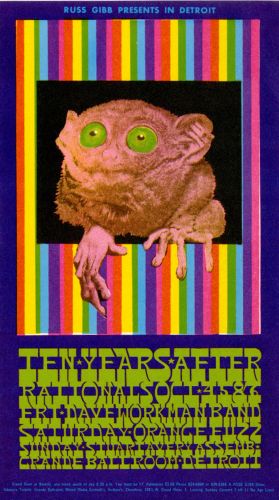
A ticket to a 1968 concert by the Rationals in Detroit.
His archived A-Squared business records reflect an enterprise always on the edge of failure, fronting significant sums for vehicles, studio time, and insurance while trying to recoup funds from booking fees, royalties, and business deals gone sour.
By 1971, Holland’s small-time, independent agency, guided by passion more than profit, was in significant financial trouble.
Amid the financial turmoil, Holland relocated to Boston, but he didn’t leave music behind, working with local radio stations and even managing another Discount Records.
In 1986 Holland donated his record collection—120,000 items filling two tractor trailers—to the nonprofit ARChive of Contemporary Music. He lived his final days in Baltimore, where he worked for a comic book distributor—another lifelong passion—and died in 1998, at age 54, from complications related to diabetes.
Holland’s younger brother, Frank, donated Holland’s papers to the Bentley in 2008, recognizing the history contained in his brother’s boxes of childhood art works, high school assignments, booking contracts, photos, scrapbooks, and everything in between.
Holland’s archive offers incredible insight into someone who never became famous and never made a lot of money, but helped shape a regional sound, mentoring acts like the Rationals and playing smaller but still influential roles for more than 50 other bands, according to music historian Alec Palao.
“[H]e was the best person to see any rock show with,” wrote rock critic Bill Marsh in a 1978 Rolling Stone column. “With Jeep, you always knew if he weren’t part of the rock business, he’d have been there anyway.”
Sources for this story include:
David A. Carson, Grit, Noise, and Revolution: The Birth of Detroit Rock ’n’ Roll. Ann Arbor: University of Michigan Press, 2005; Steve Miller, Detroit Rock City: The Uncensored History of Rock ’n’ Roll in America’s Loudest City. Boston: Da Capo Press, 2013; Dave Marsh, “Heart full of soul.” Rolling Stone, August 24, 1978; AlecPalao, “A-Square (Of Course).” Liner notes for A-Square (Of Course): The Story of Michigan’s Legendary A-Square Records. Big Beat CDWIKD 274, 2008; Richie Unterberger, Urban Spaceman and Wayfaring Strangers: Overlooked Innovators and Eccentric Visionaries of ’60s Rock. San Francisco: Miller Freeman Books, 2000.